Keflavík — Iceland's airport town
Practical guide to Keflavík and Reykjanesbær: what to do near KEF Airport, where to stay, the Viking World museum, and connections to Blue Lagoon and
Reykjavik: Keflavik airport transfer to Reykjavik
Quick facts
- Best time to visit
- Year-round; most useful as arrival/departure base
- Days needed
- 1 night maximum for most visitors
- Getting there
- Adjacent to KEF Airport; 45 min from Reykjavík by road
- Budget per day
- 10,000–18,000 ISK / €68–€123 (mid-range)
What Keflavík is
Keflavík is a fishing town of approximately 14,000 people on the northern coast of the Reykjanes Peninsula, adjacent to Keflavík International Airport (KEF) — Iceland’s main international gateway. The town and surrounding municipality are now officially called Reykjanesbær following the 2020 municipal merger of Keflavík, Njarðvík, and Hafnarnes.
For most international visitors, Keflavík means one of two things: the airport they arrive at, or the town they stay in when they want proximity to that airport. Its function as a transit point rather than a destination in its own right means it is often underestimated. It is not the most dramatic Icelandic location, but it has practical value and a few genuine points of interest.
Keflavík sits about 45 minutes by road from central Reykjavík via Route 41, and about 20 minutes by road from the Blue Lagoon.
Why stay in Keflavík rather than Reykjavík?
The primary reason is logistics. If your Iceland trip begins or ends with an early morning flight, staying in Keflavík eliminates the 45-minute drive to the airport through Reykjavík traffic. KEF Airport has a 03:00 departure problem — if you’re on a flight leaving before 06:00, getting from central Reykjavík to the airport requires a 02:00–03:00 taxi, which is expensive and requires advance booking. Keflavík accommodation is 10–15 minutes from the terminal.
The secondary reason is cost. Hotels and guesthouses in Keflavík and Reykjanesbær are consistently 20–35% cheaper than comparable accommodation in central Reykjavík during peak season. For a first and last night in Iceland, this is not insignificant.
The trade-off is that Keflavík lacks the concentration of restaurants, museums, and urban life that Reykjavík offers. For a single transit night, this is usually acceptable; for multiple nights, Reykjavík is more practical.
Keflavík vs Reykjavík as your base
| Keflavík | Reykjavík | |
|---|---|---|
| Distance to KEF | 10–15 min | 45 min |
| Accommodation cost | 20–35% cheaper | Higher, peak season |
| Restaurants/nightlife | Limited | Extensive |
| Best for | First/last night, early flights | Multi-night stays, city time |
KEF Airport: what to know
Keflavík International Airport handles all international flights to/from Iceland. The terminal was expanded in 2019 and the international departures hall is functional and modern, with the usual airport retail, duty-free (particularly for alcohol — cheaper than in the city), and food. Departure gate areas can be busy in peak summer with queues at security running 30–45 minutes; allow time.
Transfers to Reykjavík: Several shuttle bus services operate from the arrivals hall to central Reykjavík. Flybus (operated by BSÍ) and Airport Express (Reykjavík Excursions) both run frequent services costing approximately 2,500–3,500 ISK (€17–€24) one-way. Journey time is 45 minutes. Private transfers cost 12,000–18,000 ISK (€82–€123) for up to 3 passengers.
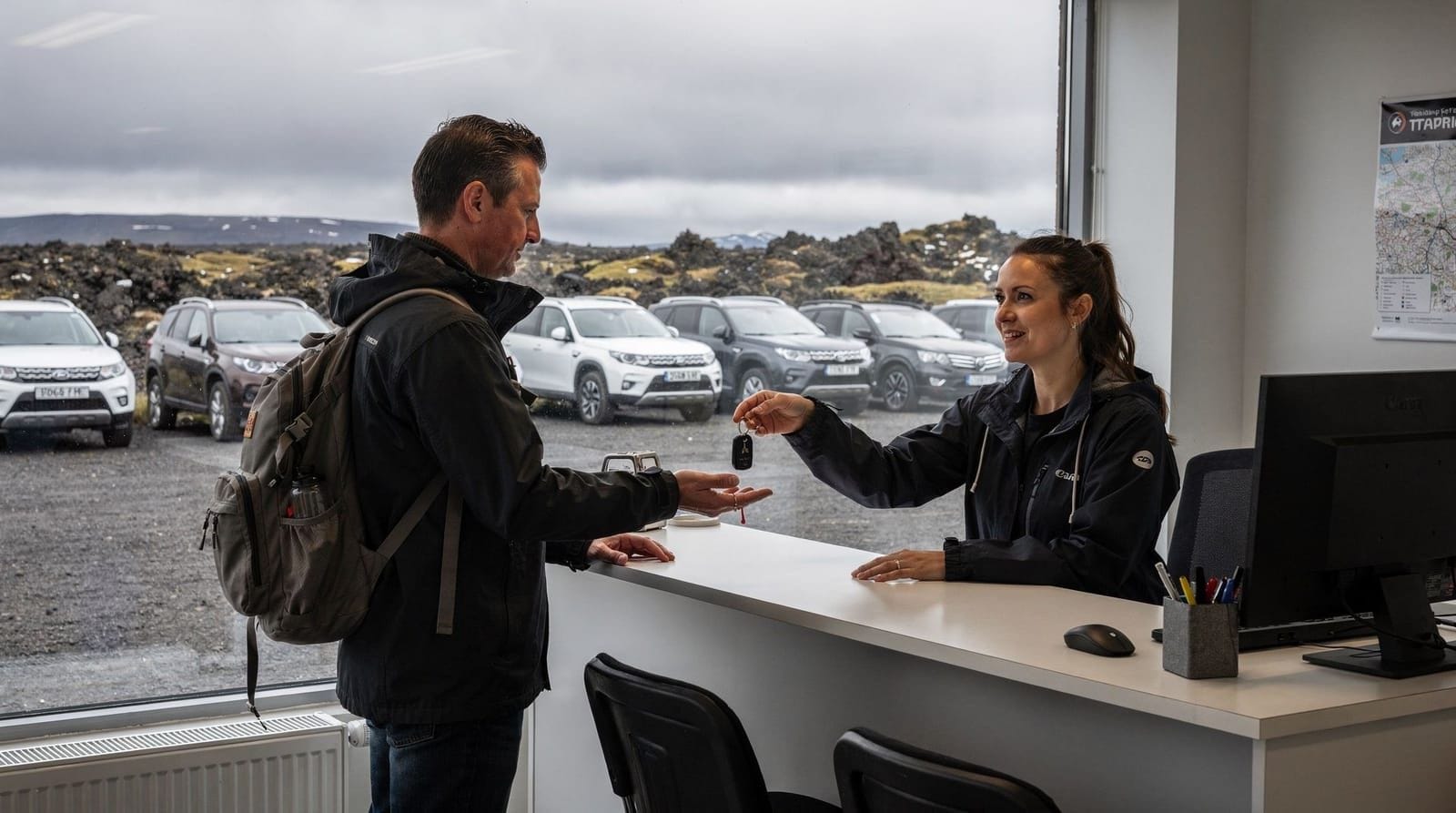
Private transfer from Keflavík Airport to ReykjavíkCar rental at KEF: The main international rental companies (Budget, Hertz, Avis, Sixt) all have desks in the arrivals hall. Icelandic operators (Lotus, Saga, Geysir) typically have off-site lots accessible by shuttle. Picking up a car at KEF and driving directly to your first stop (Blue Lagoon, Reykjanes Peninsula, or straight to Reykjavík) is the most common option for visitors planning self-drive trips. See renting-a-car-iceland guide for cost and insurance detail.
Viking World Museum
Viking World (Víkingaheimar) is the town’s main cultural attraction — a museum built around a full-size reconstruction of the Íslendingur, a replica of the Gokstad Viking ship. The original Gokstad ship (circa 900 AD) is in Oslo’s Viking Ship Museum; the Íslendingur replica was built by Gunnar Marel Eggertsson and sailed to New York in 2000 to mark the 1000th anniversary of Leif Eiriksson’s voyage to North America.
The museum displays the ship in a dedicated hall with historical context on Viking seafaring, navigation, and the Icelandic connection to North America. Entry costs approximately 2,800 ISK (€19) for adults. It is not one of Iceland’s unmissable attractions, but as museum experiences go it is well-presented and the scale of the ship is genuine. For visitors with an evening in Keflavík and an interest in Viking history, it occupies 90 minutes comfortably.
The harbour and town
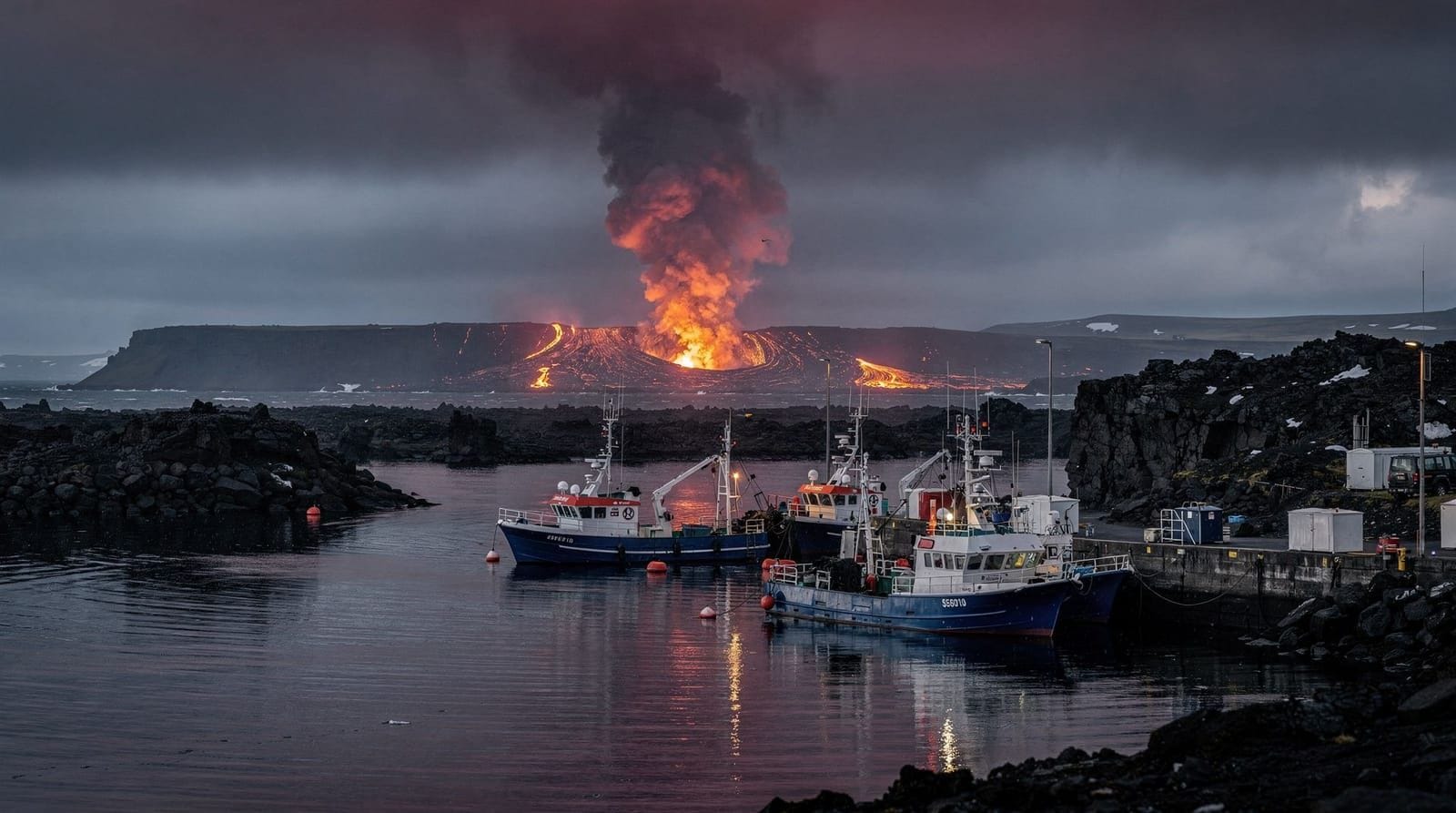
Keflavík’s old harbour area has undergone gradual renovation. The waterfront fish pier is still a working fishing harbour — trawlers dock and the fish processing industry employs a significant portion of the local population. The fish-processing smell is present on working days.
Við Tjarnina (by the pond at the town centre) is a local park area that functions as a community gathering spot in summer. The town hall area and main commercial street (Hafnargata and side streets) have a concentration of cafes, bakeries, and small shops.
Kaffi Duus in the marina area is the most consistently recommended restaurant in Keflavík — fish and chips, fish soup, and grilled catch served in a converted warehouse with harbour views. Mains run approximately 3,500–5,500 ISK (€24–€37). For the price, it is solid rather than exceptional.
The local bakery Ós Bakarí on Ásbrú (near the airport business park) is popular for fresh bread and pastries in the morning — a practical stop if you’re collecting a car and heading out early.
Ásbrú district
The former NATO base adjacent to KEF Airport (active until 2006 when US forces withdrew) has been converted into the Ásbrú Enterprise Community — a business park and residential development on the land formerly used by the US military. The base infrastructure (hangars, control towers, barracks converted to apartments) gives the area a distinctive utilitarian aesthetic. There are several hotels, office buildings, and the Aviation Museum (Flugminjasafnið) in a converted aircraft hangar.
The Aviation Museum documents Icelandic aviation history including the US military presence, the Icelandic Coast Guard, and commercial aviation. Entry costs approximately 2,300 ISK (€16). The collection includes several aircraft.
Connections to Blue Lagoon and Reykjanes Peninsula
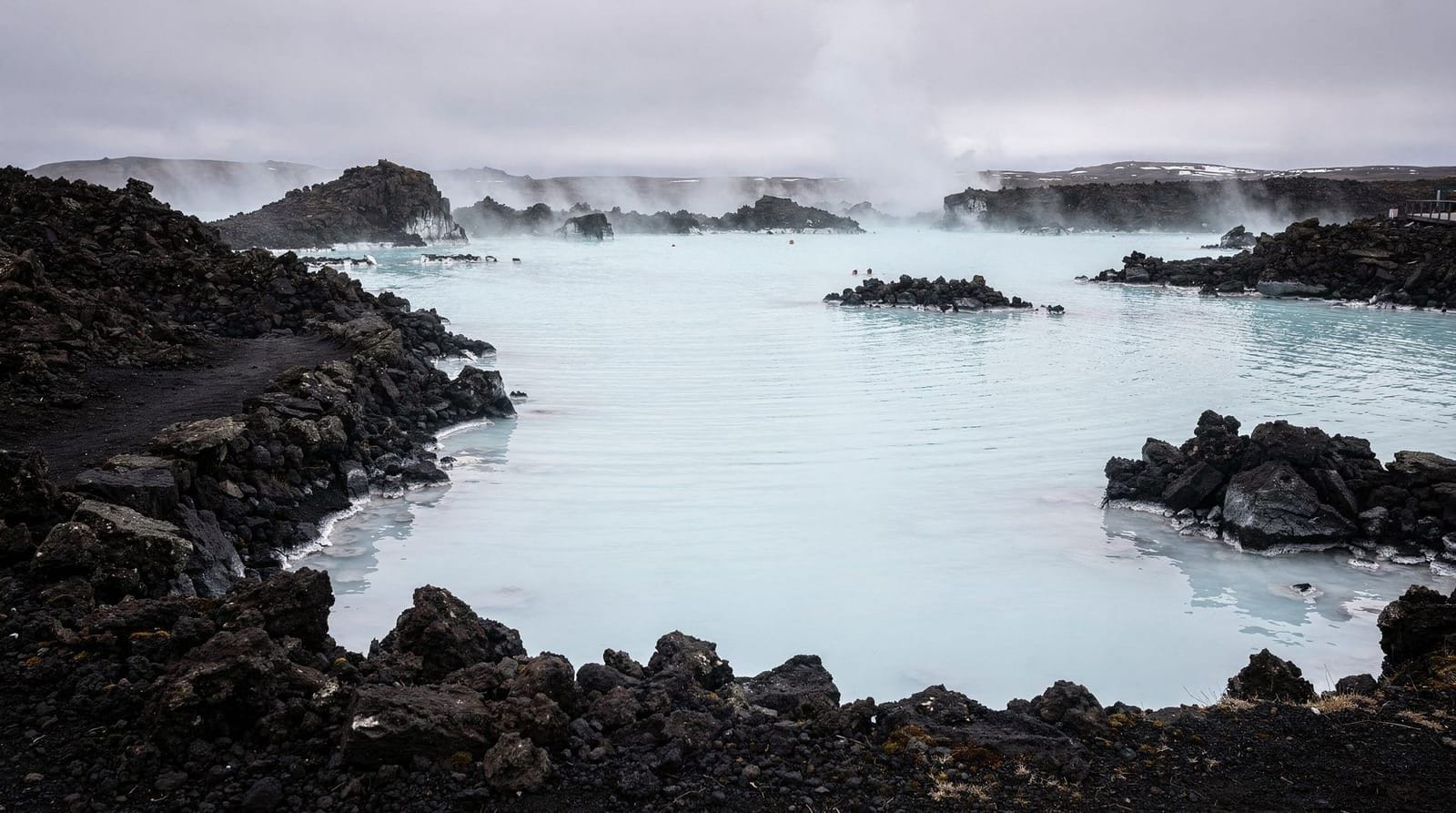
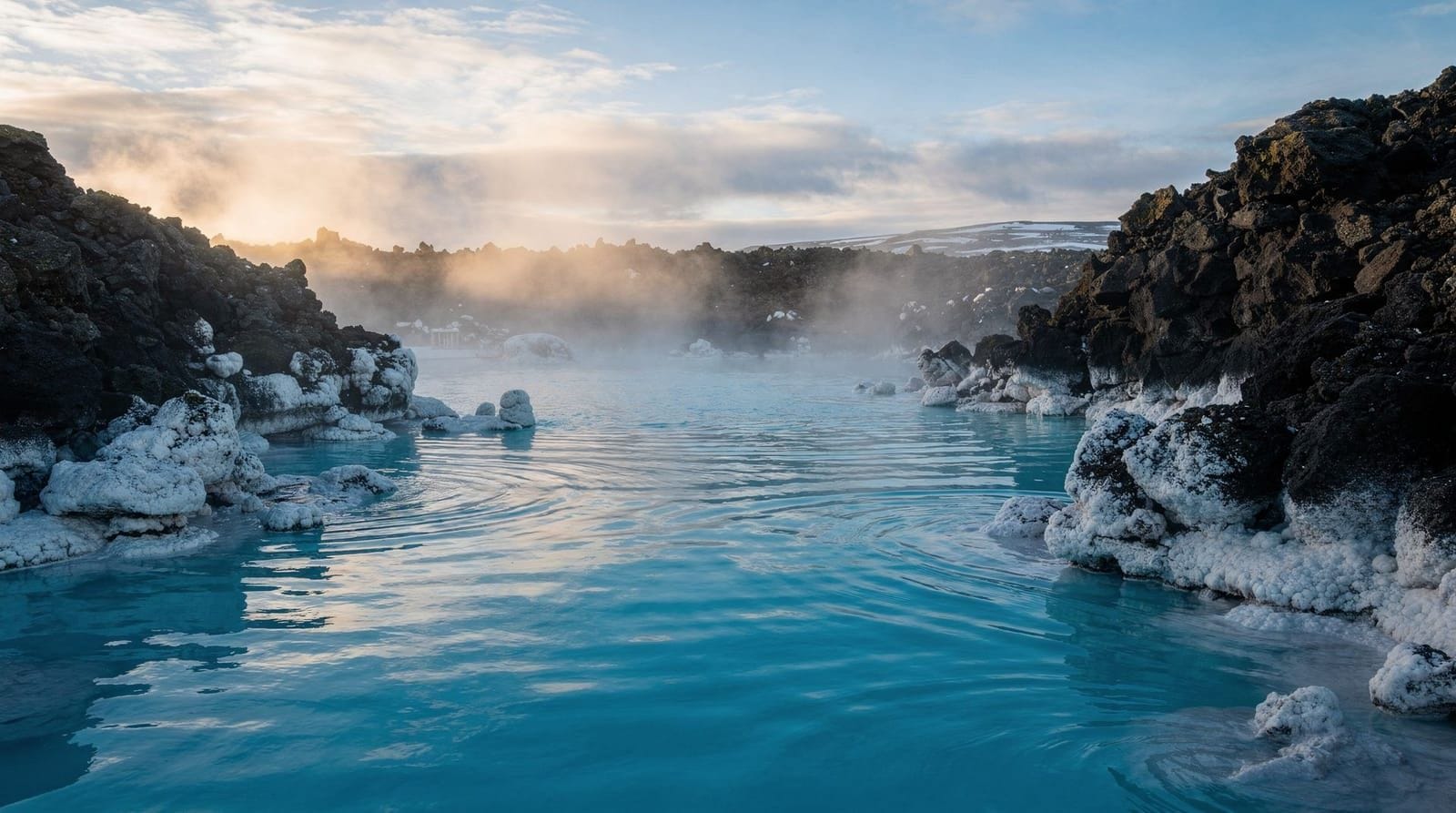
Keflavík’s main strategic advantage as a base is its proximity to the Blue Lagoon (20 minutes by road) and the Reykjanes Peninsula generally. The airport-Blue Lagoon-Reykjavík route that many travellers do in sequence is entirely logical from a Keflavík base:
- Arrive KEF, check into Keflavík hotel, recover from jet lag
- Next morning: drive 20 minutes to Blue Lagoon (pre-booked slot)
- After Blue Lagoon: drive 50 minutes to Reykjavík and begin the main trip
Or in reverse for departures:
- Last day in Reykjavík area: stop at Blue Lagoon on the way back to KEF
- Evening flight home from KEF, no early-morning Reykjavík rush
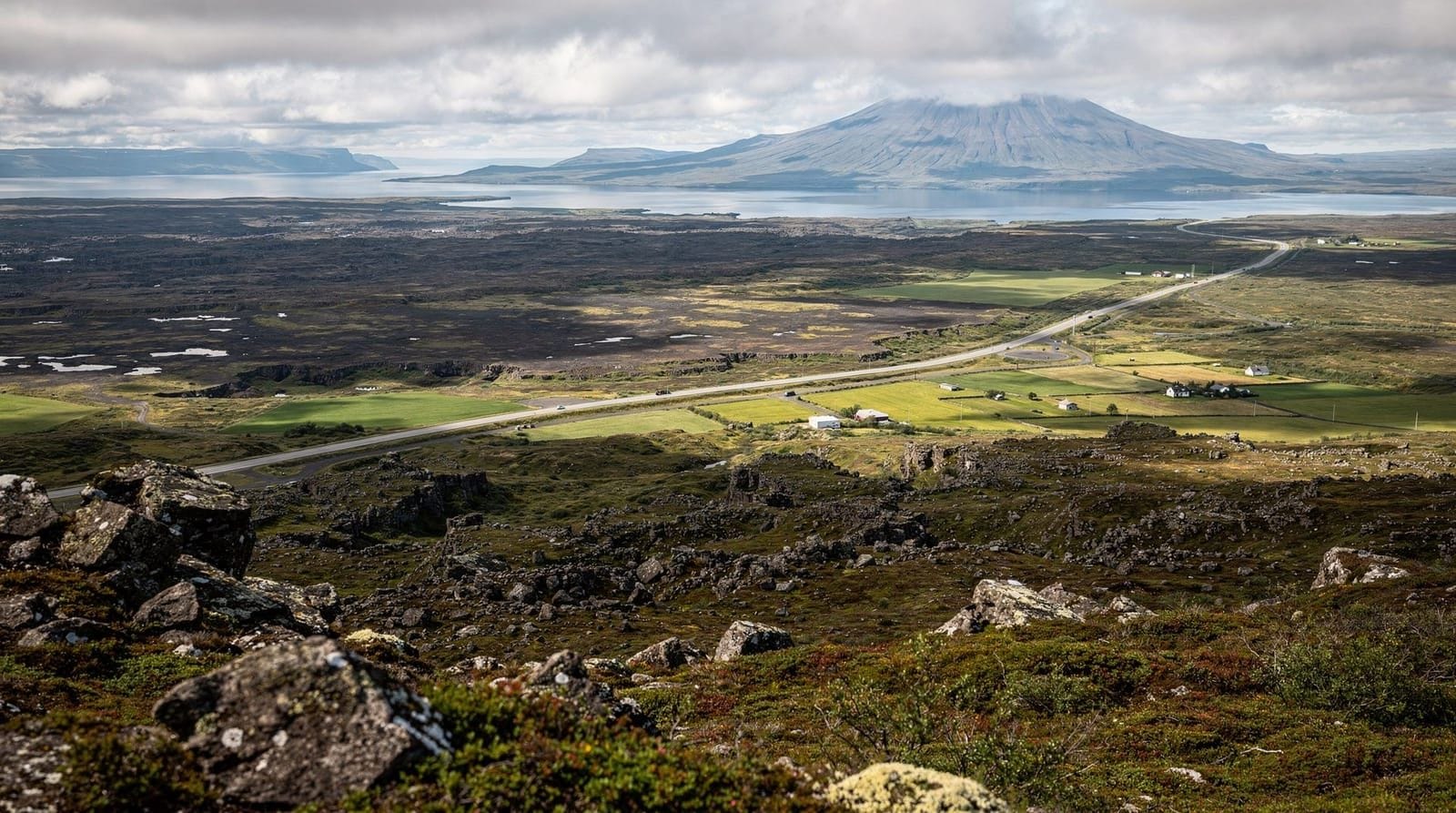
The Reykjanes Peninsula’s main sights — Gunnuhver, Bridge Between Continents, Krýsuvík — are all accessible within 30–60 minutes of Keflavík by road. A half-day circuit from Keflavík covers the peninsula before continuing to Reykjavík.
The fishing industry and local economy
Despite its airport association, Keflavík remains an active fishing town. The harbour handles both commercial trawlers (targeting cod, haddock, capelin, and shrimp) and smaller boats. The fish processing plants — visible and smell-able near the harbour on working days — represent one of the main employment sectors alongside the airport support industry and related services.
Iceland’s fishing industry is quota-managed under the ITQ (Individual Transferable Quota) system introduced in the 1980s. Keflavík’s fishing operations work within this system; the harbour is a working industrial site, not a heritage attraction, though the activity is visible from the public waterfront.
The harbour walk, particularly in the late afternoon when trawlers return, gives a realistic view of what fishing-based Iceland looks like outside of tourist context. This is a more honest economic portrait of the country than most visitor itineraries include.
Njarðvík and the commercial district
The adjacent area of Njarðvík (now part of Reykjanesbær municipality) has the main commercial and retail infrastructure: the Skjaldbreið shopping centre, a cluster of fast-food chains, hardware stores, and the main supermarkets serving the peninsula population. If you need supplies before heading into Iceland proper, Keflavík-Njarðvík is the most practical place to stock up.
Supermarkets in Keflavík area:
- Bónus (lowest prices): near Skjaldbreið shopping centre
- Nettó (mid-range): within Skjaldbreið
- Krónan: near the harbour area
For long road trips, the supermarket stop in Keflavík is more cost-effective than buying food in Reykjavík city centre or at tourist-area shops later on the route. The iceland-supermarkets-guide has a price comparison across major chains.
Night accommodation strategies near KEF
For the common scenario of an early morning departure (before 07:00), staying in Keflavík the night before and taking a 10-minute taxi (1,500–2,500 ISK / €10–€17) to the airport eliminates the stress of a pre-dawn Reykjavík departure. Key options:
Hotel Keflavík: Central location, reliable mid-range standard, approximately 22,000–32,000 ISK (€150–€218) for a double in peak season. Restaurant on-site.
Hotel Berg: Slightly outside the town centre, similar pricing tier.
Á Náttúran Guesthouse: More budget-oriented, simpler rooms, approximately 14,000–20,000 ISK (€95–€136) double.
Airport area hotels (in the Ásbrú business park): Icelandair Hotel Keflavík Airport and Hotel Njördur are physically closest to the terminal — some within walking distance. Prices are typically higher than town centre options for the convenience premium.
Book in advance for summer stays — Keflavík fills up because it serves both arriving and departing visitors.
Self-drive starting from KEF
For visitors picking up a car at KEF Airport and heading directly into Iceland, the iceland-self-drive-guide and ring-road-guide start from this exact point. The standard options for the first day:
- Drive directly to Reykjavík (45 min) and begin the city phase of a trip
- Stop at Blue Lagoon first (add 3–4 hours including time in the water)
- Drive the Reykjanes Peninsula circuit first (add 2–3 hours for a half-day circuit)
- Head directly east on Route 1 toward the Golden Circle and South Coast, bypassing Reykjavík entirely
Option 4 is underused by first-time visitors who reflexively spend their first night in Reykjavík. If your itinerary is ring-road focused, heading east immediately from KEF saves a day and gets you to the less-crowded sections faster.
Practical information
Accommodation: Hotel Keflavík, Hotel Berg, Á Náttúran Guesthouse, and several smaller guesthouses offer options across budget ranges. The Ásbrú area has additional hotel options closer to the airport terminal. A mid-range double room runs 18,000–28,000 ISK (€123–€190) in peak season.
Currency and shops: The Bónus supermarket on the main shopping strip is the cheapest option for groceries. The Skjaldbreið shopping centre has a Nettó, clothing stores, and a pharmacy.
Fuel: Petrol stations in Keflavík area include N1 and Orkan. Fuel prices are broadly uniform across Iceland — approximately 300–320 ISK (€2.05–€2.18) per litre for petrol (as of 2026). Fill up in Keflavík before the Blue Lagoon or heading to Reykjavík rather than at the airport itself.
Dining in Keflavík beyond fish
While fish and seafood dominate the traditional restaurant offering, the town’s eating options have broadened in recent years:
Paddy’s Irish Pub on the main strip is a reliable, if predictable, pub food option — good for a late arrival when other options have closed. Open until midnight or later.
Kaffi Duus in the marina remains the most recommended choice — the lunch fish of the day and langoustine soup are consistently cited by visitors and locals. Reservations advisable in summer.
Bónus supermarket hot counter: Less glamorous but practical — Bónus stores typically have a hot food counter with pre-made meals (lamb soup, rice dishes, pasta) for 800–1,400 ISK (€5.50–€9.50). Legitimate option for budget-conscious visitors who need food at 22:00.
For visitors arriving on late-night transatlantic flights (a common pattern for flights from North America), Keflavík’s later-opening food options matter more than in most Iceland locations.
Connecting onward: transport hubs
KEF Airport is the departure point for Iceland’s domestic flights (Air Iceland Connect to Ísafjörður, Akureyri, Egilsstaðir) as well as international flights. Domestic flight departure terminal is connected to the main international terminal. See the domestic-flights-iceland guide for schedules and pricing.
The BSÍ bus terminal shuttle from KEF to Reykjavík connects to Strætó’s long-distance network — buses to South Iceland, the Westfjords (summer only), and other regions. If you’re using public transport to travel Iceland rather than driving, understanding the BSÍ and Strætó connections is important. See public-transport-iceland guide for the network overview.
Frequently asked questions about Keflavík
Is it better to stay in Keflavík or Reykjavík?
For trips with an early departure or arrival, Keflavík is more practical. For a city-based stay or for visitors wanting restaurants, museums, and nightlife, Reykjavík is far superior. Many visitors spend their first or last night in Keflavík for airport logistics and all other nights in Reykjavík or on the ring road.
Can I walk from Keflavík to the airport?
Yes — from the town centre to the KEF terminal is about 2.5–3 kilometres (30–40 minute walk), entirely flat. A taxi takes 5–10 minutes and costs around 1,500–2,500 ISK (€10–€17). The airport is signposted from the town.
What is there to do in Keflavík for a layover?
For a 4–6 hour layover, the Viking World Museum (90 minutes) and a walk in the old harbour area are the main options. For 6+ hours, consider a taxi to the Blue Lagoon (20 minutes away; must pre-book). For 24-hour stopovers, the Reykjanes Peninsula circuit covers Gunnuhver, Bridge Between Continents, and Krýsuvík.
Is there public transport between Keflavík and Reykjavík?
The Flybus shuttle (BSÍ) and Airport Express both run regular services from KEF arrivals to central Reykjavík for approximately 2,500–3,500 ISK (€17–€24) one-way. Local bus service on Strætó connects Reykjanesbær to Reykjavík, but is slower and less direct. See getting-from-keflavik-airport guide for all options.
How far is Keflavík from Reykjavík?
The town centres are approximately 48 kilometres apart by road, typically 45 minutes by bus or car on Route 41. Traffic is rarely a significant issue outside Reykjavík rush hours.
Top experiences
Bookable activities with verified prices and instant confirmation on GetYourGuide.
Top-rated experiences in Keflavík — Iceland's airport town
Best-rated activities across GetYourGuide and Viator.