Seafood in Iceland — the best fish to eat, where to eat it, and what it costs
Reykjavik: Icelandic food tour
Is seafood good in Iceland and what should I order?
Icelandic seafood is exceptional — the North Atlantic fishery produces some of the world's best cod, haddock, and langoustine. Order Arctic char (bleikja) for a distinctively Icelandic fish experience, or plokkfiskur (fish hash) for the most traditional preparation. Avoid ordering salmon at restaurants if budget matters — it is farmed and widely available elsewhere.
Iceland’s fishing identity
Iceland’s economy and identity have been shaped by fishing for a thousand years. The country controls one of the richest fishing grounds in the North Atlantic, the Iceland-Faeroe-Greenland Ridge area, where cold deep water upwelling produces exceptional fish stocks. Cod, haddock, capelin, herring, and langoustine are the economic backbone. Arctic char, salmon, and brown trout are caught in Iceland’s river and lake systems.
The practical result for visitors: the fish in Iceland is genuinely excellent and often the best value high-quality food available. A fish main at a Reykjavík restaurant costs ISK 4,000–7,000, which is expensive relative to many countries but reasonable for the quality.
| Must-try | Arctic char (bleikja), plokkfiskur, langoustine at Höfn |
| Typical fish main (Reykjavík) | around ISK 4,000–8,000 |
| Budget option | Plokkfiskur or lobster soup, ISK 2,200–3,500 |
| Best langoustine location | Höfn, especially during August’s Humarhátíð festival |
| Avoid ordering | Whale (endangered fin whale) and declining puffin populations |
The fish worth eating in Iceland
Arctic char (Bleikja)
Arctic char is the most distinctively Icelandic fish you can eat. It is a salmonid — related to both salmon and trout — but with a milder, more delicate flavour than either. Iceland’s highland lakes are among the cleanest char habitats in the world, and the fish is wild-caught in rivers and lakes including Þingvallavatn (Iceland’s largest lake, at Þingvellir).
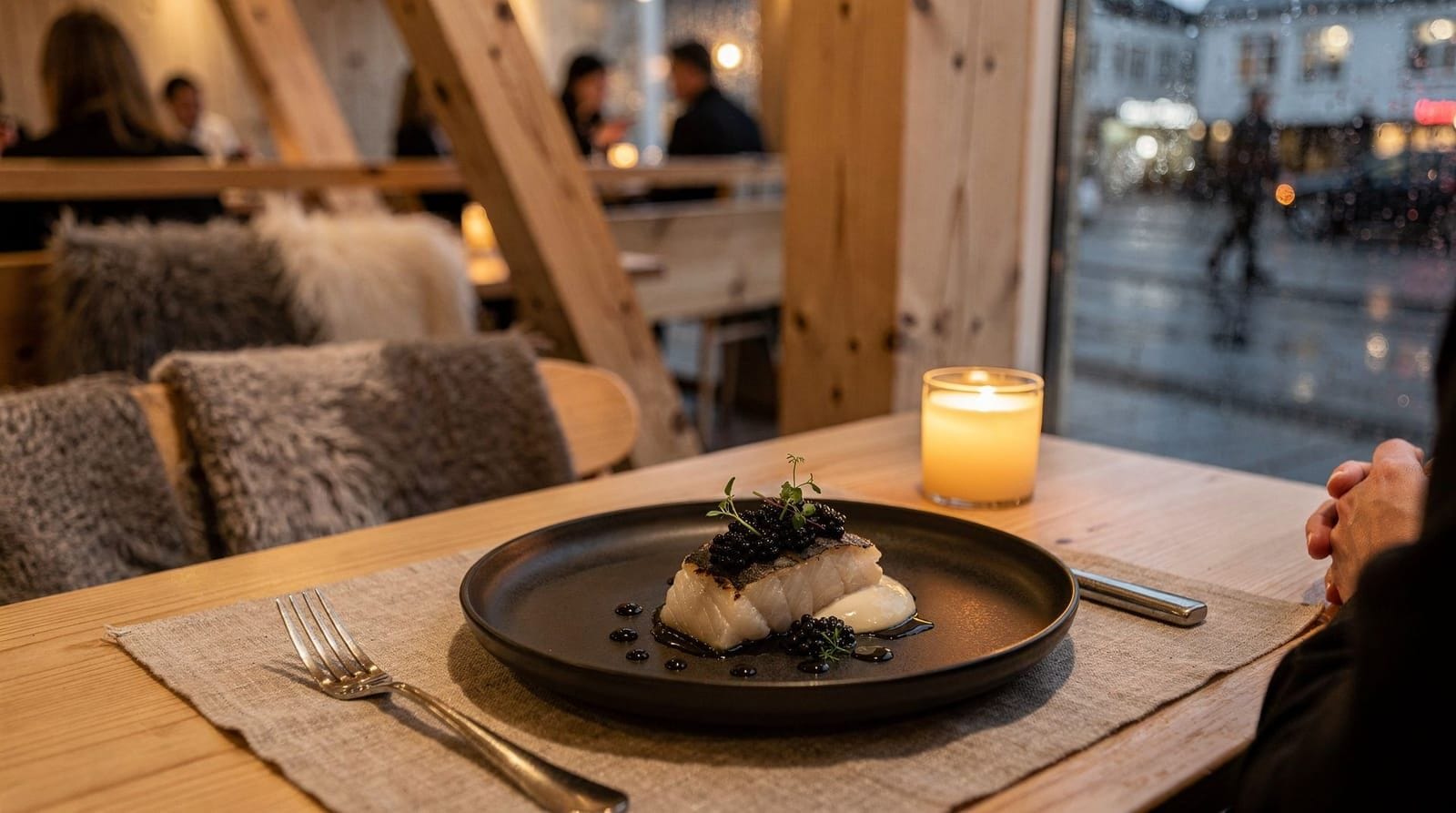
Farmed char is also available. Wild is better. If a menu specifies the source — Þingvallavatn, Lögurinn, Langisjór — it is wild and worth the premium. Prepared simply: pan-fried with butter and lemon, or cold-smoked. ISK 4,500–7,000 at a restaurant.
Cod (Þorskur)
Iceland’s historical fishing identity is built on cod. The fish is white, firm, with a clean neutral flavour that takes preparation well. The best version is simply cooked: poached with potatoes and onions (the traditional family meal), fried with butter, or as salted dried fish (harðfiskur/stockfish) which is a separate product discussed below.
Plokkfiskur (fish hash) is the most traditional cod preparation in home and café cooking: cooked cod and potatoes mashed together with onions, béchamel, and served with dark rye bread. Simple and satisfying. ISK 2,200–3,500 at cafés.
Haddock (Ýsa)
Similar to cod but slightly more delicate. Less prominent on restaurant menus than cod but excellent as fish and chips or in a fish hash. Good supermarket option for self-catering.
Langoustine (Humarhúsið)
Norwegian lobster (langoustine, Dublin Bay prawn) is caught in Icelandic waters and is one of the best — and most expensive — Icelandic seafood experiences. Langoustine tails are prepared as a starter or main, often in a butter sauce or as a bisque. ISK 4,500–8,000 for a starter, ISK 7,000–10,000 for a main.
Höfn in southeast Iceland is the langoustine capital of Iceland — the town’s small fishing harbour supplies much of the country’s catch, and August brings the annual Humarhátíð (lobster festival). Visiting Höfn during this period means langoustine at near-catch prices.
Salmon (Lax)
Icelandic river salmon is wild, excellent, and expensive. Farmed Icelandic salmon (the main commercial product) is also good but widely available internationally. At restaurants, farmed salmon is often the cheapest fish option but it is not distinctively Icelandic. If you can access smoked wild salmon — from a specialist shop or farm — that is worthwhile.
Skate (Skata)
Skate is a traditional Icelandic fish eaten at þorrablót (midwinter festival). Fermented skate — like hákarl — has a pungent ammonia smell and is an acquired taste. Fresh skate, lightly poached, is mild and pleasant but unusual. Not commonly found outside traditional restaurants and festival periods.
Harðfiskur — dried fish snack
Harðfiskur is wind-dried haddock or cod — thin strips of air-dried fish that serve as Iceland’s traditional snack food. It tastes intensely of dried fish, slightly chewy, with a concentrated ocean flavour. Eaten with Icelandic butter. Found at supermarkets (ISK 500–900 for a bag), tourist shops, and some farms and service stations along the Ring Road.
Icelanders eat it the way people elsewhere eat dried nuts or crackers. It is genuinely good as a snack if you like dried fish, and it is one of the most portable genuinely Icelandic food products.
Where to eat seafood in Reykjavík
Sægreifinn — Sea Baron (Geirsgata 8, Old Harbour)
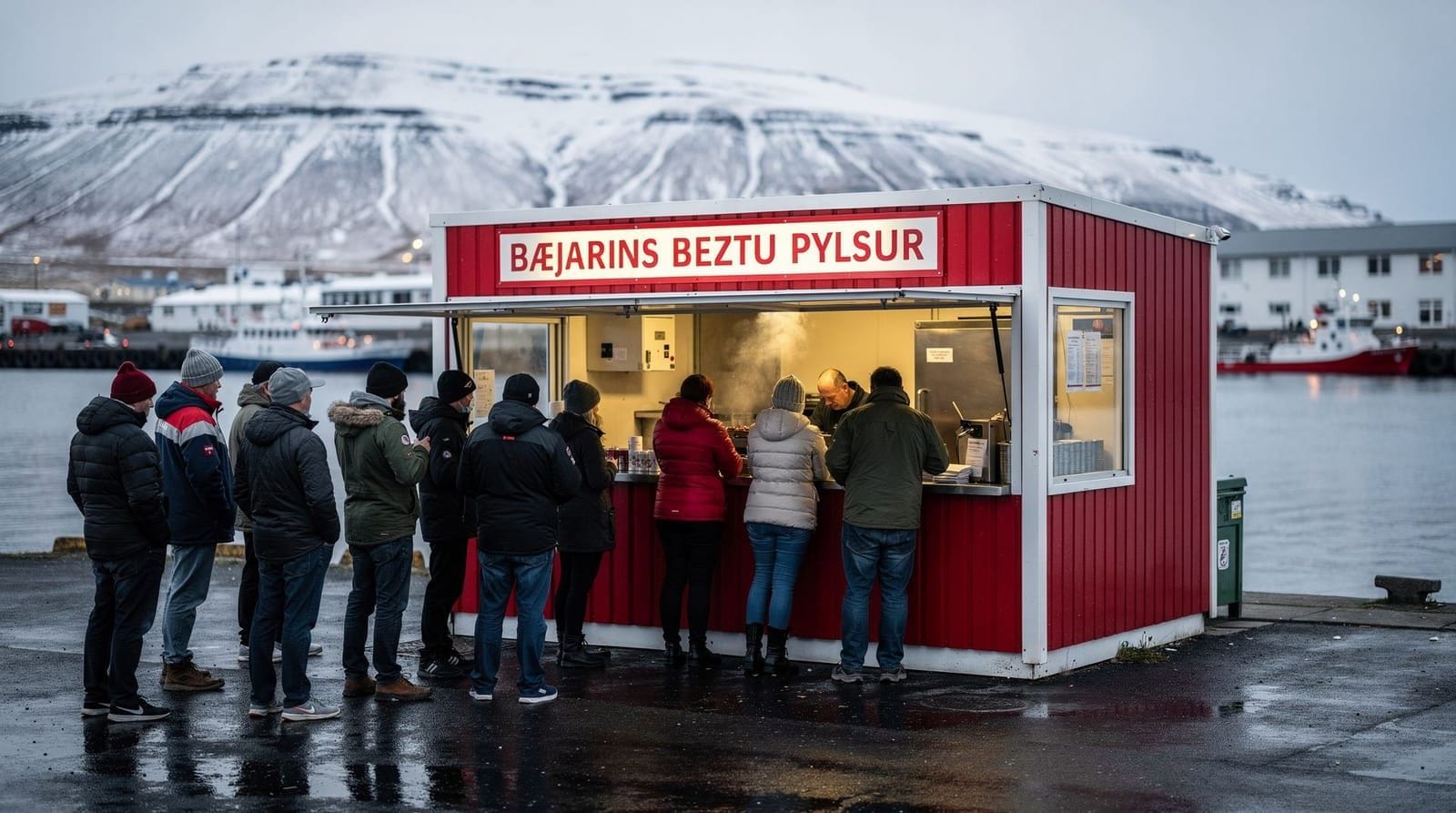
Informal harbour-side restaurant known for lobster soup and grilled seafood kebabs. The langoustine soup (ISK 2,200) is excellent for the price. The taxidermied marine animals decorating the walls are part of the charm. Queue outside is common. No reservations.
Fiskfélagið — Fish Company (Vesturgata 2a)
Traditional fish preparations in a basement space. Arctic char and cod dishes are the mainstay. ISK 4,500–7,000 for mains. Reliable and not trying to be fashionable.
Fiskmarkaðurinn — Fish Market (Aðalstræti 12)
More fusion-oriented than Fish Company, with pan-Asian influences on the fish preparations. Sushi, whole fish, and langoustine-based starters. ISK 5,000–7,500 for mains.
Messinn (Lækjargata 6b)
Cast-iron skillet fish — fish of the day, langoustine, and Arctic char served sizzling. ISK 2,800–4,500. No reservations, arrive early.
Harbour area casual options
Grandagarður (the Old Harbour area) has several casual fish restaurants and takeaways. The Fisherman restaurant and Hrönn both serve good-quality fish at reasonable prices (ISK 2,000–4,000 per plate). Worth exploring for lunch.
Along the Ring Road
Good seafood is not limited to Reykjavík:
Húsavík: Known for whale watching, but the harbour-side restaurants also serve good fish. The town is worth a meal if you are doing the Diamond Circle route.
Höfn: The langoustine capital. Multiple small restaurants serve langoustine as the main event, particularly around the August lobster festival. ISK 3,500–7,000 for a langoustine dish — significantly cheaper than Reykjavík for the same quality.
Stykkishólmur (Snæfellsnes): A small fishing town on the Snæfellsnes Peninsula where the ferry to Westfjords departs. Good fish restaurant at the harbour.
Ísafjörður: Capital of the Westfjords, with reliable harbour restaurants. More remote but worth the trip if you are exploring the Westfjords.
Practical notes on prices
Fish is not cheap at restaurants in Iceland. Expect to pay:
- Langoustine starter: ISK 4,500–8,000
- Cod or haddock main: ISK 3,800–6,000
- Arctic char main: ISK 4,500–7,000
- Langoustine main: ISK 7,000–12,000
- Plokkfiskur (fish hash at a café): ISK 2,200–3,500
- Lobster soup at Sægreifinn: ISK 2,200
Supermarket fish is a much cheaper option for self-catering. Fresh cod, haddock, and salmon are available at Hagkaup, Bonus, and Krónan. Smoked salmon (ISK 1,500–2,500 per 200g pack) is good quality and travels well in a cool bag.
Frequently asked questions about seafood in Iceland
What is the best seafood to order in Iceland?
Arctic char for a uniquely Icelandic experience. Langoustine if budget allows and you are near a fishing town. Plokkfiskur (fish hash) for the most traditional preparation at accessible prices. Harðfiskur (dried fish) as a snack.
Is fresh fish available outside Reykjavík?
Yes, but availability narrows as you move to smaller communities. Fishing towns with active harbours — Höfn, Húsavík, Stykkishólmur, Ísafjörður — have good fresh fish at restaurants. In highland and interior areas, fish is typically served from refrigerated/frozen stock.
Is fish expensive in Iceland at restaurants?
Yes. Fish mains run ISK 4,000–8,000 at Reykjavík restaurants. Even simple fish dishes are priced in the mid-range tier. The exception is plokkfiskur and lobster soup, which are café-priced (ISK 2,000–3,500).
What is plokkfiskur?
Plokkfiskur is a traditional Icelandic fish hash: cooked white fish (usually cod or haddock) mashed with boiled potatoes, onions, and a creamy béchamel sauce, served with dark rye bread and butter. It is a home cooking staple and appears on café menus as a filling, affordable meal.
Is the salmon in Iceland wild or farmed?
Both exist. River salmon fishing is wild and expensive (permits to fish Icelandic rivers can cost hundreds of thousands of ISK per day). Restaurant and supermarket salmon is almost always farmed. Farmed Icelandic salmon is good quality but no more distinctive than Norwegian farmed salmon.
What is harðfiskur and should I try it?
Harðfiskur is wind-dried fish (usually haddock or cod) — a traditional Icelandic protein snack eaten with butter. It has a concentrated fish flavour and a chewy texture. Available at supermarkets. Worth trying if you like dried fish products; not for everyone but genuinely traditional.
Is it cheaper to eat seafood at a food tour than individually at restaurants?
Usually comparable rather than cheaper — a food tour costs roughly what 2–3 individual small dishes would across the same number of stops, but you save the logistics of finding and booking multiple restaurants, and you get context from a local guide on what you’re eating. It suits travellers who want breadth (many small tastes) over a single large restaurant meal.
Should I order whale meat if I see it on a menu?
No. Iceland hunts fin whales (an internationally endangered species under CITES) and minke whales commercially despite significant international criticism, and ordering whale directly funds that continued demand. Many Reykjavík restaurants have removed it from menus in recent years for this reason — treat any remaining whale-meat “tourist menu” as one to avoid rather than a cultural must-try.
Iceland’s fishing history and quotas
Iceland’s relationship with the sea is not merely culinary — it is constitutional. The fishing industry has shaped Iceland’s economy, politics, and international relations since the 18th century. The Cod Wars between Iceland and Britain (1958–1976) — disputes over Icelandic extension of its fishing exclusion zone from 4 miles to 200 miles — nearly resulted in Iceland withdrawing from NATO. The UK ultimately conceded, establishing the 200-mile exclusive economic zone that Iceland still manages.
The current quota system (ITQ — Individual Transferable Quotas) allocates fishing rights to vessels based on historical catch records. The system is economically efficient but socially controversial within Iceland — critics argue it concentrates access to the fishery in the hands of a few large operators at the expense of small fishing communities. Understanding this context helps explain why Icelandic fishing towns like Höfn, Húsavík, and Ísafjörður have very different economic trajectories than they did 30 years ago.
For visitors, the context means: the fish in Iceland is managed under a quota system that limits total catch to sustainable levels. The fish you eat in Iceland is, in theory, being harvested at a rate the stocks can sustain — a conservation claim that few fishing nations can make as credibly.
Fish sustainability and what to order consciously
Cod: Icelandic cod stocks have recovered significantly since the early 1990s when they were at critical lows. Current quota levels are considered sustainable by the Marine Stewardship Council (MSC). Ordering Icelandic cod is not ecologically problematic.
Haddock: Similarly well managed, MSC certified for Icelandic fisheries.
Capelin (Loðna): A small pelagic fish used for fish meal and oil as well as human consumption. Capelin roe (lumpfish roe is more common for retail) is available in spring. The capelin quota fluctuates significantly year to year depending on stock assessments.
Whale: Iceland hunts fin whales (an internationally endangered species) and minke whales commercially, despite significant international criticism. The fin whale is listed on CITES Appendix I (prohibiting international commercial trade). Eating whale in Iceland contributes directly to demand for a practice that is internationally controversial and scientifically questioned. This is the one area where a food choice in Iceland intersects with conservation in a meaningful way.
Puffin: Puffin is hunted in Iceland under a quota system. Atlantic puffin populations have declined significantly in Iceland and internationally. Several restaurant menus in Reykjavík have removed puffin in recent years in response to population concerns. The Westman Islands’ puffin population declined by over 50 percent between 2000 and 2020.
Seasonal fish calendar
Icelandic fish availability follows seasonal patterns:
Winter (November–March): Peak cod and haddock season. The best plokkfiskur of the year. Dried fish (harðfiskur) traditionally made from winter-caught cod.
Spring (April–May): Capelin roe season. Wild salmon rivers open for fishing. Arctic char from highland lakes as ice breaks.
Summer (June–August): Langoustine peak season. Best time to visit Höfn for the langoustine festival (August). Lobster soup at its freshest.
Autumn (September–October): Herring season in some northern harbours. Arctic char and salmon fishing close on most rivers by mid-September.
The fish market at Reykjavík harbour
Fiskmarkaðurinn in the old harbour area sells fresh fish retail on most weekday mornings. This is not a tourist market — it is a working fish market where restaurants and local buyers come first. But visitors can purchase fresh cod, haddock, and whatever has come off the boats that morning.
If you are self-catering with access to a kitchen (apartment rentals, some guesthouses), buying fish at the market and cooking it at your accommodation is the best quality and best value option. Fresh Icelandic cod poached in butter and served with boiled potatoes and rye bread is the home cooking meal that sits at the heart of Icelandic food culture.
Alcohol pairing with Icelandic seafood
Iceland has wine and beer cultures appropriate for fish pairing:
White wine: Vínbúðin stocks a reasonable selection including Muscadet (classic Loire pairing for shellfish), Alsace whites, and various international whites. ISK 2,500–4,500 for a drinkable bottle.
Craft beer: As covered in the Icelandic craft beer guide, Ölvisholt Skjálfti pale ale and Kaldi lager both pair well with fish. The Kaldi Bar and Bryggjan Brugghús harbour brewery are natural combinations for an Icelandic fish and beer evening.
Aquavit: The traditional Scandinavian spirit, flavoured with caraway and dill, is increasingly available in Iceland. A small pour of Brennivín (Iceland’s own aquavit, nicknamed Black Death) alongside harðfiskur is the most traditional Icelandic spirit-and-snack combination, particularly at þorrablót midwinter festival.
The Icelandic fish market as a cultural institution
Iceland’s relationship with fish goes beyond cuisine. The fishing villages and harbours that dot the coastline — from Höfn on the southeast to Ísafjörður in the Westfjords — represent communities built entirely around the sea. Visiting a working harbour in the early morning, watching the catch come off the boats, and buying directly from a fisherman is increasingly possible through farm and fishery tourism initiatives.
Höfn remains the most accessible example. The harbour is active and the distance from the fishing industry to the plate is effectively zero. A bowl of langoustine at a Höfn restaurant in August, during the annual Humarhátíð festival, involves langoustine that was likely caught within 24 hours and 20 km. This is as fresh and as local as fish gets in any context.
For visitors on the Ring Road who want to experience Icelandic seafood at its source rather than at a Reykjavík restaurant, timing the southeast Iceland segment to include Höfn in August, or Húsavík for whale watching and fresh northern fish, produces a significantly richer food experience than restricting dining to the capital.
Guided food tours that include seafood
If you’d rather taste your way through Icelandic seafood with a local guide than navigate menus solo, Reykjavík has several walking food tours built around exactly this:
Reykjavík Icelandic food tour Reykjavík food walking tour with 6 tastingsThese typically include a langoustine or fish course alongside other Icelandic specialities (skyr, harðfiskur, lamb) at 3–5 stops around the city centre and old harbour — a practical shortcut if you want to sample widely without booking multiple restaurant reservations.
Seafood on a self-catering budget
If you have kitchen access — an apartment rental, some guesthouses, or a campervan — self-catering seafood is the single best value approach to eating well in Iceland. Fresh cod and haddock fillets at Bónus or Krónan typically run ISK 2,000–3,000/kg, a fraction of restaurant pricing for the same fish. A simple pan-fried cod with butter, lemon, and boiled potatoes replicates the classic Icelandic home meal for a few thousand ISK feeding two people, versus ISK 8,000–14,000 for the equivalent restaurant meal.
Practical self-catering tips: Buy fish on the day you plan to cook it — Icelandic supermarket fish doesn’t carry the same shelf life expectations as frozen imports elsewhere. Krónan generally has a slightly better fresh fish selection than Bónus, though both are reliable. Smoked salmon (ISK 1,500–2,500 per 200g) travels well and needs no cooking, useful for a Ring Road picnic lunch. Vacuum-packed harðfiskur keeps for weeks and makes a good car snack that needs no refrigeration.
Seafood for dietary restrictions and allergies
Shellfish allergy is common enough that Icelandic restaurants generally handle it well — langoustine, the main shellfish item on most menus, is usually clearly labelled and easy to substitute with a fish main. Pescatarians travelling in Iceland generally eat very well, since fish appears on nearly every menu including budget cafés and petrol station food counters, unlike in destinations where pescatarian options are limited to a single token dish.
For anyone avoiding fish entirely, Iceland’s food culture is more fish-centred than most European countries, and menus outside dedicated vegetarian restaurants can feel restrictive — lamb is the other main protein, and vegetarian mains are improving but still less common outside Reykjavík. Planning ahead with restaurant research matters more for non-fish-eaters than for pescatarians in Iceland.
Gluten-free travellers should note that plokkfiskur is typically gluten-free on its own (potato, fish, béchamel made carefully) but is traditionally served with rye bread — ask for it without if needed. Most seafood mains (grilled or pan-fried fish) are naturally gluten-free; batter-fried fish and chips is the main exception to check.
Icelandic seafood vocabulary for menus and fish markets
Navigating Icelandic menus is easier with basic vocabulary. Many restaurants provide English translations, but understanding the Icelandic terms helps at fish markets and smaller cafés.
Þorskur — cod. The backbone of Icelandic fishing. Often listed as “fresh cod” or “skrei” (the premium migratory winter cod).
Ýsa — haddock. Mild, white, slightly sweeter than cod. Common in fish-and-chips style preparations.
Lax / Silungur — salmon / trout. Lax often refers to Atlantic salmon (farmed or wild). Silungur is Arctic char, which appears frequently in Iceland and has a deeper pink colour and slightly richer flavour than standard trout.
Humar — Icelandic langoustine (often called lobster in English). Smaller than true lobster, but rich and sweet-flavoured. Húsavík and Höfn are the major production areas.
Rækja — shrimp. Icelandic cold-water shrimp are small, sweet, and sold ready-cooked. Available by the bag at fish markets and supermarkets.
Skate / Skata — skate (the flat ray fish). Traditionally eaten at þorrablót midwinter celebrations, fermented and strongly ammonia-scented. Not a casual visitor experience, but if offered a small piece at a winter festival, trying it is the sporting choice.
Steinbítur — wolffish (literally “stone-biter”). Firm, mild, white flesh. Underutilised by most restaurants but excellent when pan-fried simply. Worth ordering when you see it on a menu.
At fish markets like the Reykjavík Fish Market (Fiskmarkaðurinn) and the harbour markets in Höfn or Ísafjörður, this vocabulary lets you navigate the stalls, ask questions, and make informed choices beyond the obvious salmon fillet that dominates tourist menus.
Top experiences
Best-rated activities across GetYourGuide and Viator.

Reykjavík All In One Food Tour - Eat, Drink & Explore with Locals
- Viator

Akureyri Food Walk With 4-5 Tastings and a Local Guide
- Viator

Private Snæfellsnes Peninsula and local Lunch
- Viator
Akureyri: From Akureyri lake Myvatn guided tour with lunch
- GetYourGuide
Akureyri: Private walking tour
- GetYourGuide
Akureyri: Port city walk local food
- GetYourGuide