Reykjavík on a rainy day
When the forecast says sideways rain
Iceland’s weather is not always dramatic in the photogenic sense. Sometimes it is just grey and wet and the wind makes an umbrella actively dangerous. This was the situation on day two of my April visit to Reykjavík: the forecast showed a solid band of rain from mid-morning through evening, temperatures around 5°C, and gusts strong enough to be listed in the advisory section of the weather service.
This was, in retrospect, one of the best days of the trip. Here is how it unfolded and what I would recommend to anyone facing the same conditions. The key insight is counterintuitive: the worst weather days in Reykjavík often produce the best indoor experiences because you are forced to slow down and pay attention to places that most visitors rush past on their way to a day trip.
| Where | Reykjavik city centre, walkable core |
| Time needed | Full day, flexible ordering |
| Cost range | Around 1,000–10,000 ISK per stop depending on venue |
| Getting around | On foot, 10–20 minutes between most stops |
| Best backup | A municipal pool (Laugardalslaug) over the tourist lagoons |
The case for the geothermal pool first
The natural instinct when it rains is to go indoors. In Iceland, this is wrong. The geothermal pools — the old municipal ones, not the resort lagoons — are best experienced in bad weather. Laugardalslaug on the east side of Reykjavík is the city’s largest outdoor pool complex: 50-metre main pool, multiple hot pots at temperatures from 38 to 44°C, a steam room, waterslides. Entry costs around 1,000-1,100 ISK (roughly 7 EUR) for adults. It is a local space, primarily for Reykjavík residents, and on a rainy Tuesday in April it has a completely different atmosphere from the tourist-heavy experience of the Blue Lagoon or Sky Lagoon.
The specific pleasure is sitting in a hot pot at 41°C while rain falls on your face. The contrast is real and feels correct. Locals bring their children, chat in small groups, and pay no attention to the weather. You will leave warmer and in better spirits than when you arrived. I spent 90 minutes at Laugardalslaug on that April morning and it reset the entire day.
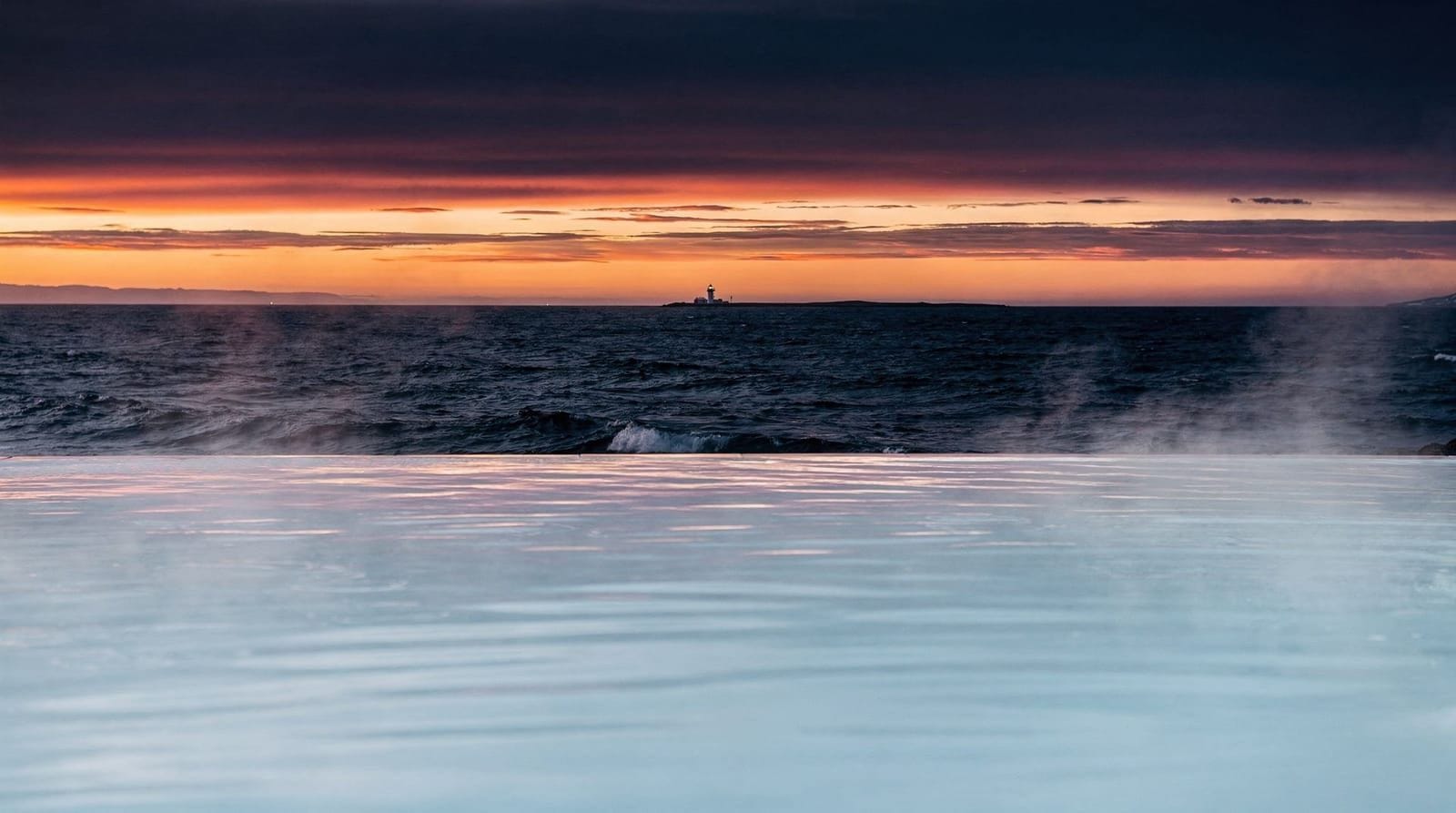
Sky Lagoon is the more polished option — dramatic cliff-edge location, seven-step ritual, a serious design sensibility — and it is worth visiting once, but it costs significantly more (around 8,990-10,990 ISK depending on tier versus 1,100 ISK at the municipal pool) and the experience is deliberately curated in a way that Laugardalslaug is not.
If you want the Sky Lagoon experience on a wet day, the Pure Pass includes the seven-step ritual and entry; it is genuinely excellent as a half-day option and the cliff-edge view over the grey Atlantic in bad weather has its own drama.
The Reykjavík Art Museum: three buildings, choose wisely
The Reykjavík Art Museum operates across three venues. Kjarvalsstaðir is my first recommendation: it houses a permanent collection of Jóhannes Kjarval’s work, Iceland’s most beloved 20th-century painter. His large-format landscapes — lava fields, mountains, the strange light of the interior — reward time. Entry is around 1,700 ISK. The building is a mid-century pavilion set in a park, and the cafe inside is decent for a lunch stop.
Hafnarhús, the former warehouse down by the harbour, houses contemporary Icelandic art including Erró’s donation of several thousand works. It is more experimental and sometimes exhausting in the best way. The waterfront location means the building shakes slightly in a serious gust, which in bad weather adds an inadvertent ambient element to the art.
The third venue, Ásmundarsafn in Laugardalur, is the studio of sculptor Ásmundur Sveinsson. The building itself is the draw — a white dome house the sculptor built himself in the 1940s, surrounded by outdoor sculpture. Worth a quick stop if you are already at Laugardalslaug.
The National Museum of Iceland
The National Museum on Suðurgata is the most comprehensive single-building introduction to Icelandic history. The top floor covers the settlement era through the medieval period — the sagas, the Commonwealth, the conversion to Christianity — with genuine artifacts including carved wooden church doors, domestic objects, and the famous bronze figure of Þór. Budget 2-3 hours; entry is around 2,500 ISK for adults.
What I appreciate about it is the lack of triumphalism. The exhibits are honest about the difficulties of medieval Icelandic life: famine, the Black Death arriving in 1402, the pirate raids of the early 17th century. The Icelandic sagas get serious treatment rather than a tourist-friendly gloss. There is a reading room near the medieval section where you can sit and look at facsimile manuscript pages. I spent 30 minutes there on the rainy day and found it unexpectedly affecting.
The gift shop sells decent English-language editions of the sagas at around 2,000-4,000 ISK. Buy them there rather than searching later; the selection outside specialist bookshops is limited.
Hallgrímskirkja: inside is different from outside
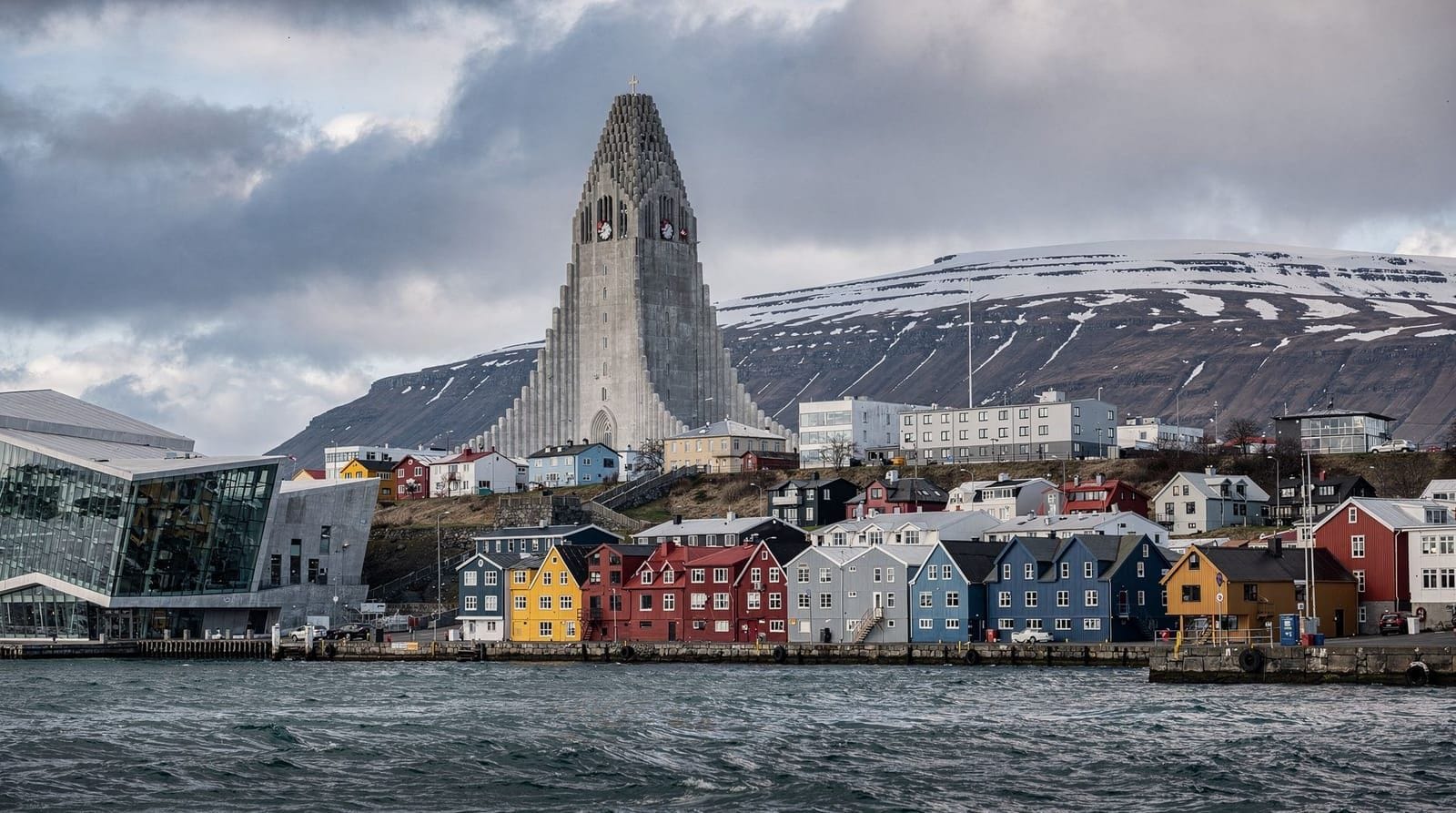
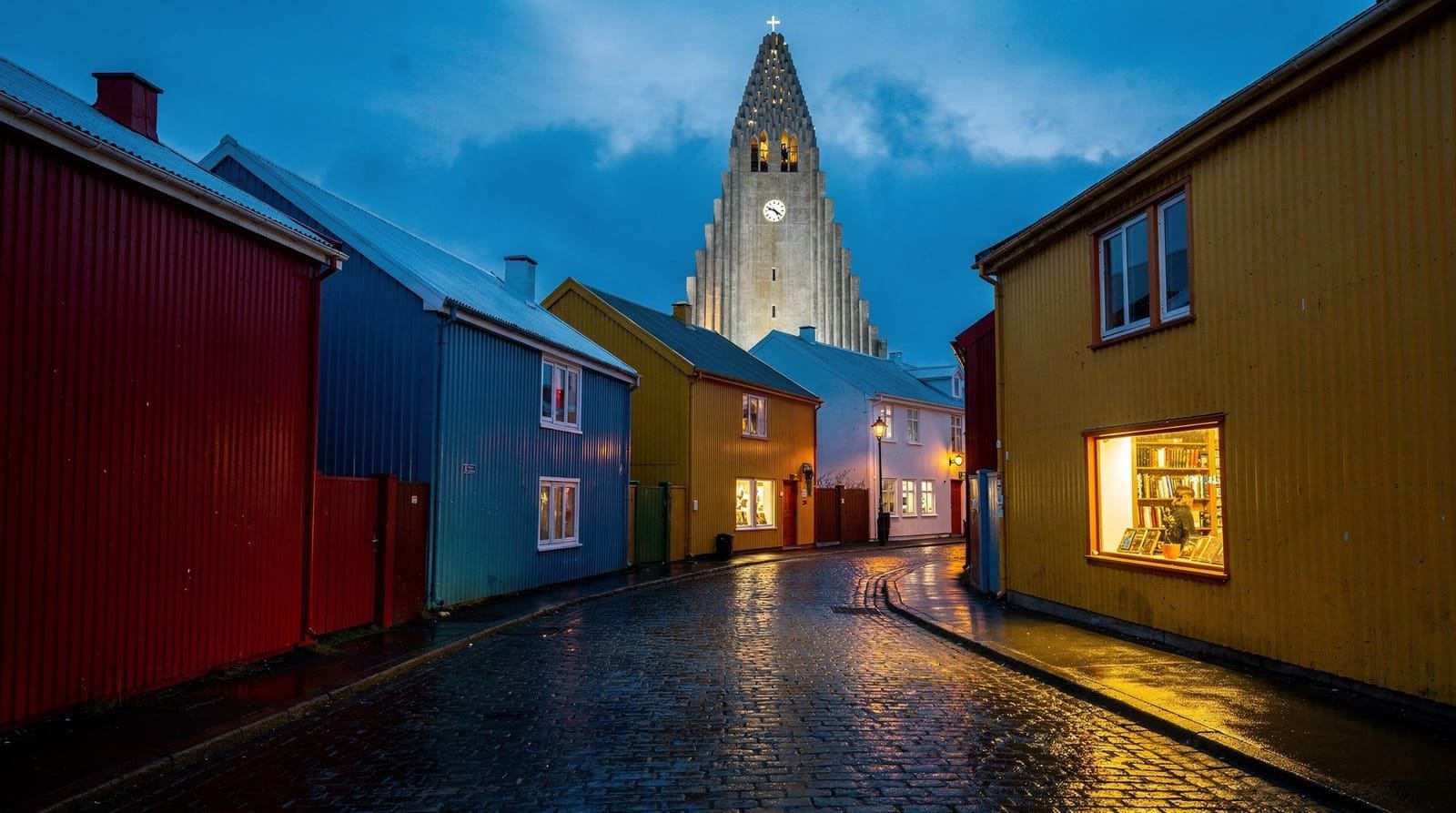
Most visitors photograph Hallgrímskirkja from the outside. In rain, the tower observation deck is closed or unpleasant, so many people skip the interior. This is a mistake. The Lutheran church interior is almost shockingly spare: bare concrete walls, a huge pipe organ installed in 1992, and a light that changes completely with the sky outside. On a grey rainy day, the space fills with a kind of cool northern luminosity that photographs cannot capture.
Entry to the church is free; the tower elevator is around 1,000 ISK and only worth it in clear weather. If there is a recital or rehearsal happening — check the church website for schedule — the organ in this acoustic space is extraordinary. We happened on a 30-minute rehearsal by a visiting organist and stood in the back for the entire thing.
Lunch: Café Loki across the street
Directly across from Hallgrímskirkja, Café Loki serves traditional Icelandic food at prices that are high by world standards but reasonable by Reykjavík standards. The lamb soup (kjötsúpa) for around 2,500 ISK is genuinely good — root vegetables, slow-cooked lamb, properly seasoned. The rye bread (rúgbrauð) is made in the traditional way using geothermal heat buried in the ground at Laugarvatn. The smoked trout on dark bread is another good option.
Avoid the hákarl (fermented shark) unless you are committed to the experience. It does not get better with explanation. The flavour is ammonia and the texture is foam rubber. The correct approach is one cube, quickly, to say you did it.
The queue at Café Loki is manageable if you arrive before noon or after 1:30 p.m. The room is small and the tables turn over reasonably fast.
Bookshops and the afternoon window
Mál og Menning on Laugavegur is the best bookshop in the country for English-language material on Iceland — sagas, natural history, photography, contemporary fiction in translation. It also has a cafe upstairs where I spent two hours on a rainy afternoon reading about Egill Skallagrímsson and drinking mediocre coffee without apology.
The 101 neighbourhood around Laugavegur is also good for gallery-hopping. The Kling og Klang gallery and several smaller commercial galleries keep regular hours. None of them require advance booking; some are free. The Spark Design Space on Skólavörðustígur shows Icelandic product and furniture design and is worth a look even if you are not buying.
Eymundsson on Austurstræti, the other major bookshop, has a broader general selection and is useful for picking up current Icelandic crime fiction in translation — a genre Iceland excels at and that pairs well with bad weather.
The Perlan museum
Perlan sits on the Öskjuhlíð hill above the city inside the distinctive dome building. The main attraction for a rainy day is the permanent exhibition on Icelandic nature: a real ice cave (constructed from ice brought from Vatnajökull), a planetarium with northern lights simulation, a glacier exhibition. Entry is around 4,900 ISK for the full package. It is slickly produced and genuinely informative; the ice cave is the standout element. The temperature inside the ice cave section is around -10°C — they give you a jacket, but bring a layer.
There is also an observation deck — covered — with city views. In clear weather this is spectacular; in rain you can still see the harbour and the mountains to the north through the glass, and the cloud formations over the bay are often interesting in their own right.
A hop-on-hop-off bus combined with Perlan entry is worth considering if you have a full rainy day and want to move between the Perlan, the harbour, and the city centre without getting soaked between each stop.
The Reykjavík City Museum and the Settlement Exhibition
The Settlement Exhibition on Aðalstræti is built around an actual Viking longhouse excavation — you look down through glass floors at the remains of a farmhouse from around 871 AD. Small space, maybe 45 minutes, but the experience of standing above a verified 11th-century structure in a modern city building is striking. Entry is around 1,700 ISK. The Reykjavík culture guide covers several other smaller museums nearby that can fill a wet afternoon.
Dinner: the harbour area
The old harbour area on the north side of the city has gone through sustained renovation and now has a reasonable concentration of restaurants that are not tourist traps. Coocoo’s Nest and Matur og Drykkur are both worth booking in advance; the latter does updated traditional Icelandic cooking at prices that reflect the quality. A dinner for two with wine at Matur og Drykkur will run 18,000-25,000 ISK, which is not modest, but the quality is genuinely high.
Fish and chips from a harbour stall costs around 2,000-2,500 ISK and is sometimes exactly the right call after a day of museums. The Reykjavík Chips stall near the harbour does a version with homemade sauce that regularly features in recommendations.
The food guide for Reykjavík covers options at different price points and includes the current best options for mid-range dining without the tourist premium.
What the rain actually changes
One honest observation: Reykjavík is a small city with a culturally dense core. A rainy day removes the temptation to keep moving and forces you into the things that repay slower attention — the museum reading the objects carefully, the bookshop, the pool conversation with a stranger. Some of my best conversations with Icelanders happened in hot pots in miserable weather, when staying inside the water was the obvious choice for everyone.
The city’s walkable core is compact enough that you can cross it in 20 minutes on foot. The Laugavegur and Bankastræti streets form the main commercial spine; most of the museums, galleries, and restaurants are within 10 minutes’ walk of this axis. Even in heavy rain, with a proper waterproof jacket, navigating between stops is manageable. What you lose in comfort you gain in the satisfaction of experiencing a northern city in its genuine climate rather than the optimised-for-tourists version.
The Reykjavík 48-hour itinerary has recommendations for both good and bad weather days, including a useful ordering of priorities if time is limited.
Choosing between the three art museum venues
If you only have time for one Reykjavík Art Museum site, here’s how they compare.
| Venue | Best for | Time needed | Entry |
|---|---|---|---|
| Kjarvalsstaðir | Kjarval’s landscapes, calmer pace | 60–90 min | ~1,700 ISK |
| Hafnarhús | Contemporary/experimental art, Erró | 60–90 min | ~1,700 ISK |
| Ásmundarsafn | Sculpture, quick stop near the pool | 30–45 min | ~1,700 ISK |
Kjarvalsstaðir is the strongest single choice if you’re only doing one; Ásmundarsafn works best paired with Laugardalslaug since they’re a short walk apart.
Building the day around rain severity
Not every rainy day is the same, and the plan should flex with it.
Drizzle or light rain: Walk the 101 core normally — bookshops, galleries, the National Museum, Hallgrímskirkja’s interior. A light waterproof jacket is enough.
Steady rain with wind: Prioritise the geothermal pool first (you’re wet either way, and the hot water changes your mood for the rest of the day), then move to fully indoor stops like Perlan or the National Museum.
Genuinely severe weather, wind advisories: Stay close to the city centre core rather than attempting Perlan’s exposed hilltop position or any walk longer than 10 minutes between stops. The Reykjavík culture guide has a cluster of smaller museums within the compact core for exactly this scenario.
Checking the forecast the night before rather than the morning of makes the biggest practical difference. Iceland’s weather service (vedur.is) issues colour-coded warnings, and a yellow or orange alert for wind is worth taking seriously enough to restructure the day around it rather than pushing through with an umbrella that will not survive the gusts anyway.