Snaefellsnes day tour from Reykjavik: honest review
Grundarfjörður: From Reykjavik full day Snaefellsnes peninsula
Duration: ~11 hours
What the Snaefellsnes day tour covers
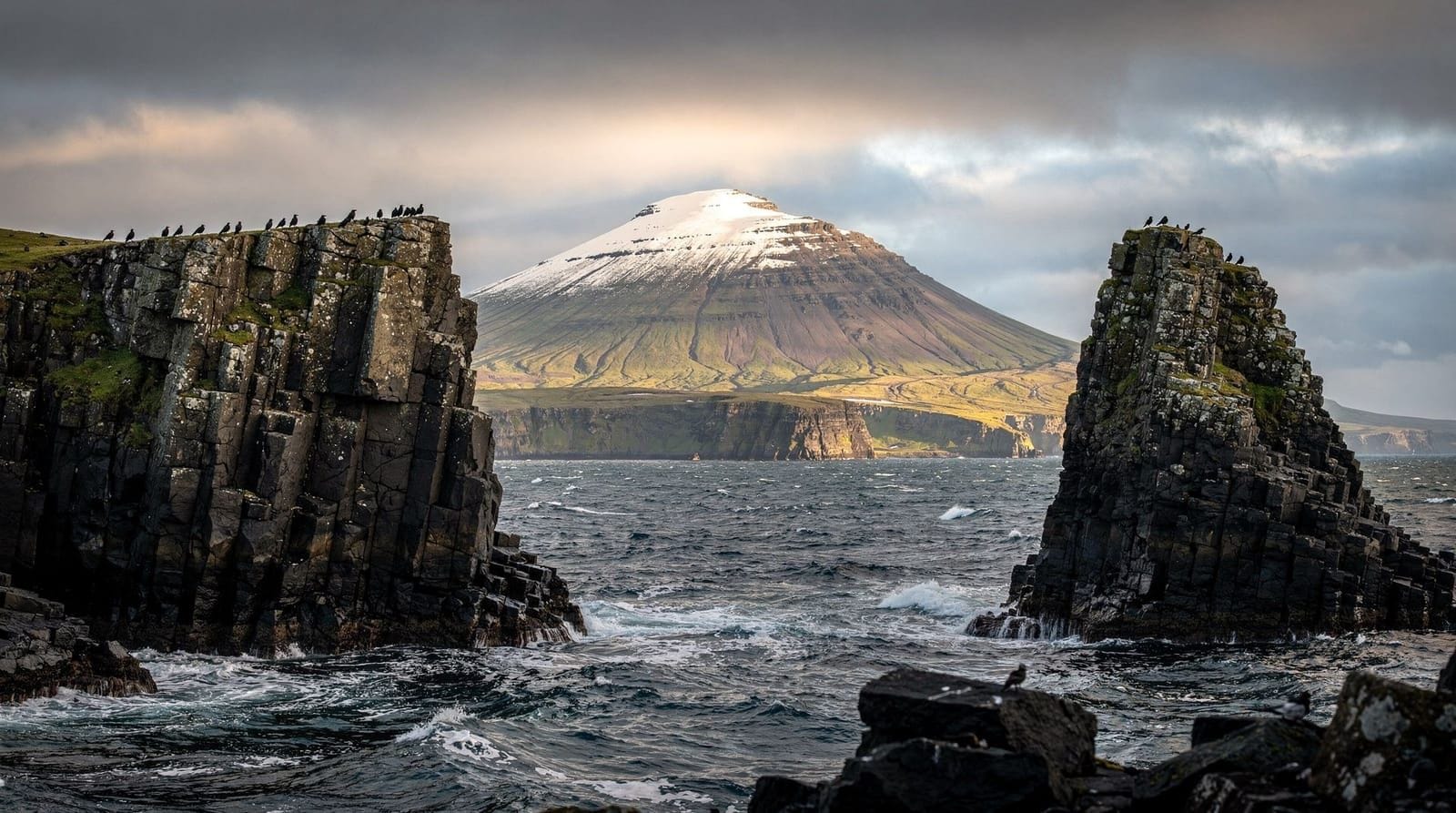
The Snæfellsnes Peninsula extends 90 km into the Atlantic Ocean west of Reykjavik, ending at Snæfellsjökull — the glacier at the tip of a dormant stratovolcano. Jules Verne set the entrance to the center of the Earth here in his 1864 novel; locals have considered the glacier area mystically significant for much longer.
| Where | Snæfellsnes Peninsula, west Iceland, 2–3hrs from Reykjavik |
| Cost | around ISK 16,000–25,000 per person (coach/minibus) |
| Time needed | 11–12 hours round trip from Reykjavik |
| Getting there | Route 1 to Borgarnes, then Route 54 around the peninsula |
| Best time | May–September for full access; March–April for snow on Kirkjufell |
A full-day tour from Reykjavik makes a circuit of the peninsula, typically covering:
South side of the peninsula:
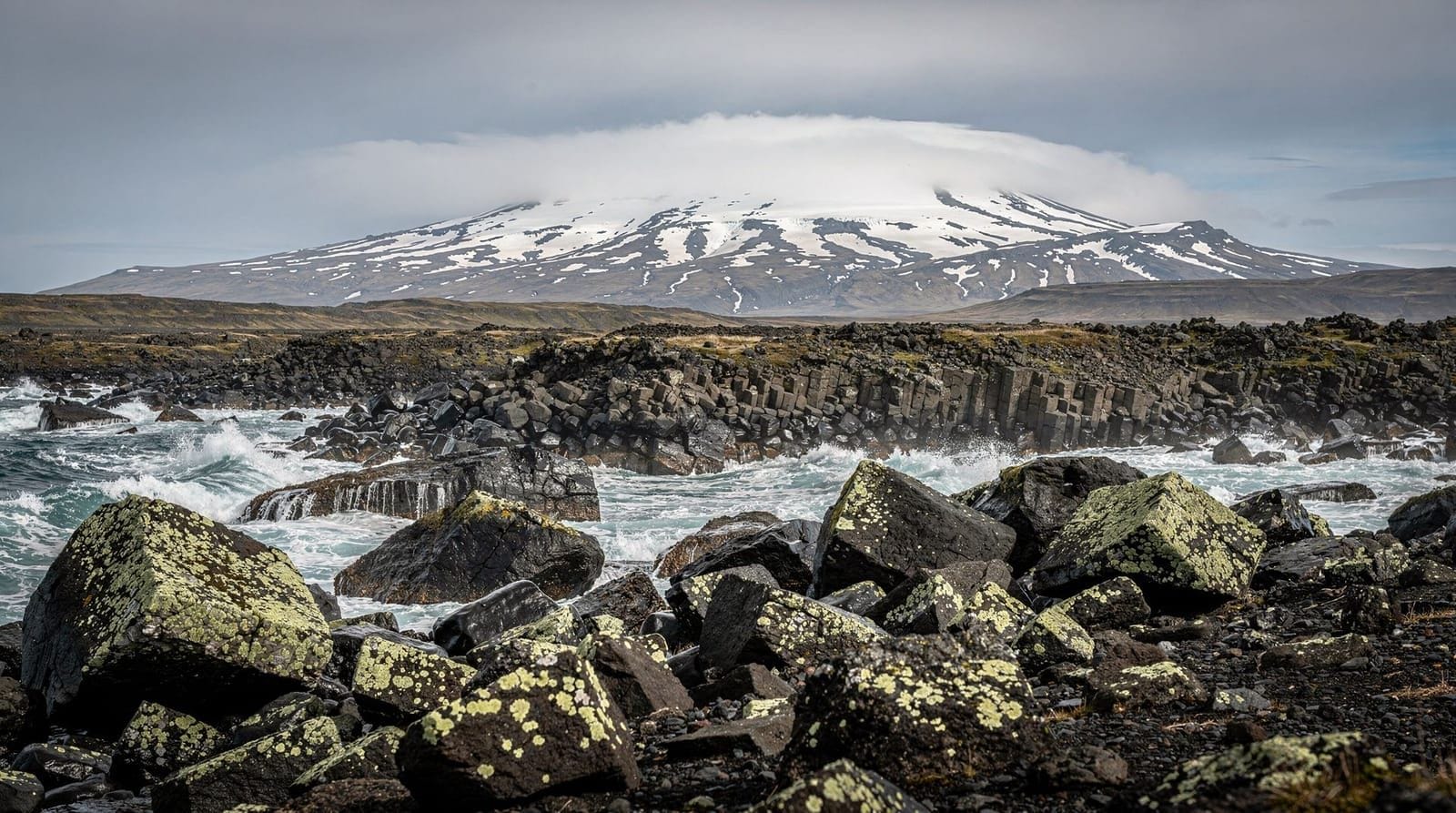
- Snæfellsjökull glacier viewpoints (the volcano summit area, visible on clear days)
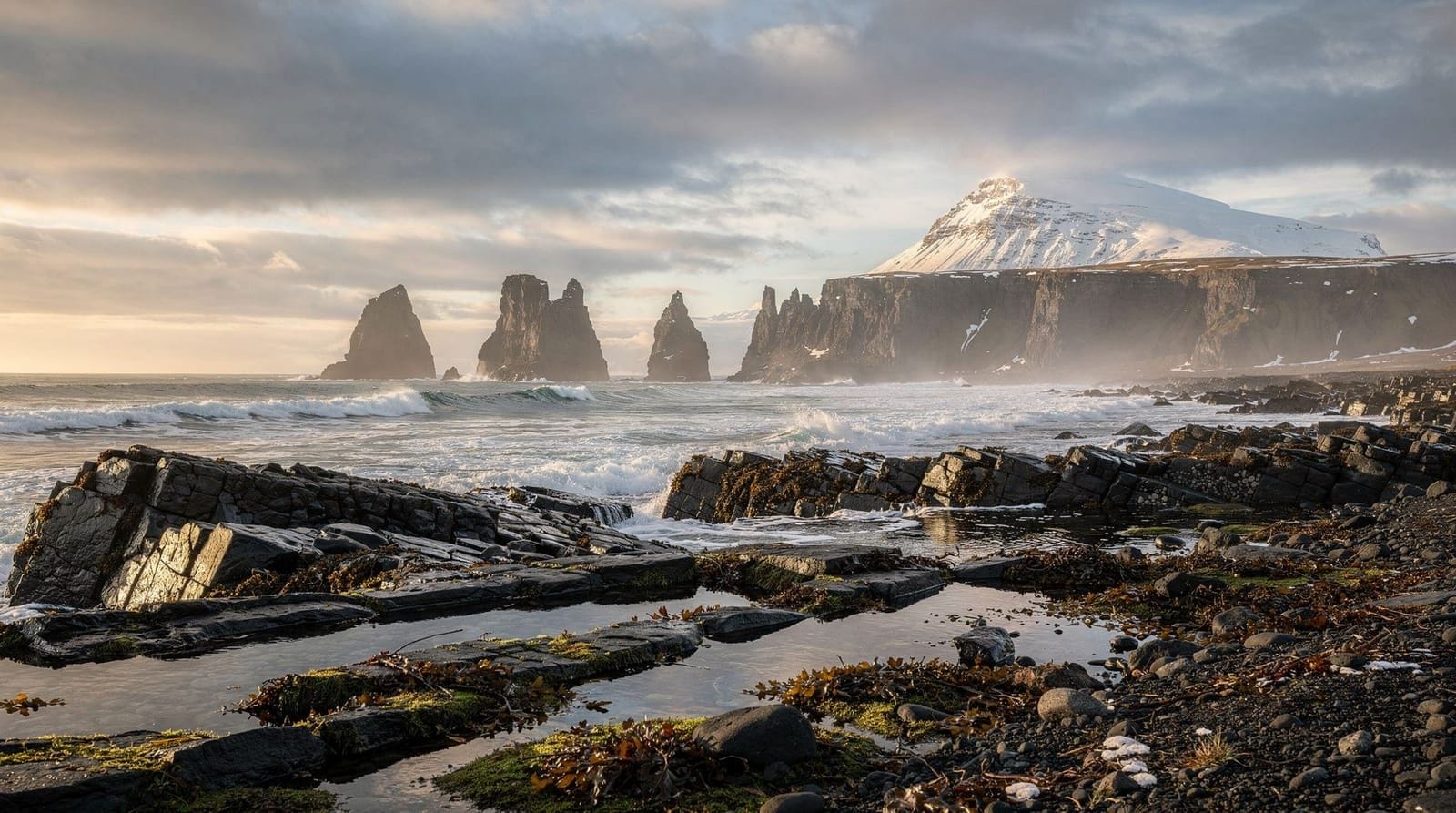
- Djúpalónssandur beach — a black pebble beach with dramatic rock formations and the remains of a fishing vessel
- Hellnar sea cliffs and sea cave (Baðstofa)
- Arnarstapi, the main village on the south coast
North side of the peninsula:
- Grundarfjörður fishing village
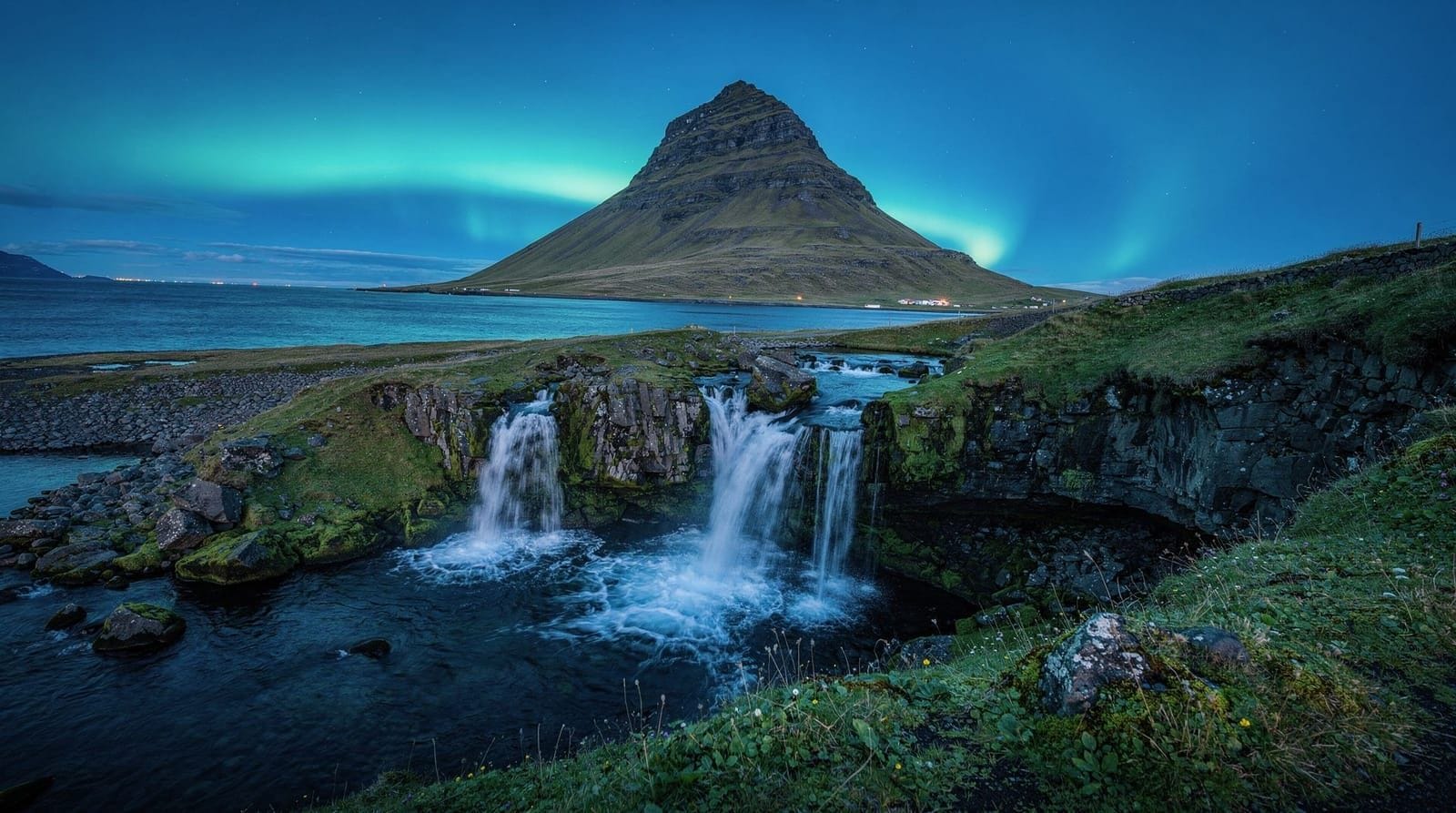
- Kirkjufellsfoss waterfall and Kirkjufell mountain — the most photographed natural landmark in Iceland
- Stykkishólmur — the largest town on the peninsula, with red ferry boats and a distinctive church on a hill
- Bjarnarhöfn Shark Museum (hakarl — fermented Greenlandic shark — tasting available)
Not all tours cover the same sites in the same order. Some skip the north coast; others skip Arnarstapi. Confirm the specific itinerary before booking.
The driving reality
The round trip from Reykjavik to Snaefellsnes covers approximately 300–350 km depending on the route. Most tours depart at 8 AM and return by 7–8 PM — approximately 11–12 hours total, with 5–6 hours of bus travel. Individual stops typically run 30–60 minutes.
This is long. The scenery on the drive is good (lava fields, mountains, ocean), but 5 hours on a coach is taxing. Small-group minibus tours (8–12 people) handle this more comfortably than large coaches.
The honest question: Is one day enough for Snaefellsnes?
No — but it is better than not going. The peninsula is best experienced over two days with a night in Grundarfjörður or Stykkishólmur, which allows you to photograph Kirkjufell at sunrise/sunset and see the north coast more thoroughly. The Snaefellsnes 2-day itinerary covers this approach.
For visitors with only one day and no other option, the day tour delivers a genuine overview of the peninsula’s highlights.
Pricing and tour types
| Tour type | Price per person | Group size |
|---|---|---|
| Full-day large coach | ISK 16,000–18,000 | 30–45 people |
| Full-day small group minibus | ISK 20,000–25,000 | 8–16 people |
| Private guided tour | ISK 50,000–80,000 per vehicle | 1–6 people |
| Self-drive (car + fuel for two) | ISK 6,000–10,000 per person | — |
What to prioritize on a single day
If your guide asks what you most want to see, these are the priorities:
Kirkjufell and Kirkjufellsfoss (non-negotiable): The mountain and its foreground waterfall in Grundarfjörður is the most photographed natural scene in Iceland. In summer it is green; in winter with snow and ice it is different but equally striking. Allow 30–45 minutes. Photography is best at golden hour (late evening in summer, midday in winter).
Djúpalónssandur beach: A cove of black pebbles (unusual — most Icelandic black beaches are sand) surrounded by dramatic lava formations and sea stacks. The rusted remains of a British fishing trawler that wrecked here in 1948 are partially visible at the beach. Genuinely atmospheric. Allow 30 minutes.
Arnarstapi sea cliffs: A short walking path along basalt sea cliffs with nesting arctic terns (summer) and dramatic wave erosion formations. The natural arch and the path to Hellnar are beautiful on a clear day. Allow 30–45 minutes.
Stykkishólmur harbor: The most charming town on the peninsula, with colorful fishing boats and a viewpoint from the old lighthouse on the hill. If you have time for coffee, the Narfeyrarstofa café in the old town is worth knowing (fish soup, excellent).
What you can skip: The Shark Museum in Bjarnarhöfn is entertaining if you want to try hakarl (the fermented shark is genuinely unpleasant to smell and taste — it is a cultural experience, not a culinary recommendation). It adds 30–45 minutes for a niche experience.
Self-drive versus guided tour
For two or more people with a driving license, self-drive is almost always better value on Snaefellsnes than a guided tour. The roads are well-maintained, the sites are clearly signposted, and you control your own schedule.
Self-drive advantages:
- Stop as long as you want at Kirkjufell (guides typically allow 20–30 minutes on tours)
- Go at sunrise (5 AM in summer) when light and crowds are optimal
- Eat where you choose
- Add detours to Rauðfeldsgjá gorge, Búðir black church, or Snæfellsbær visitor center
Self-drive what to know:
- Route F570 (toward the glacier summit) requires a 4x4; do not attempt in a 2WD
- The Peninsula circuit on Routes 54, 574, 55 is fully paved and suitable for any car
- Fill up fuel in Borgarnes or Snæfellsbær — there are limited stations on the peninsula
Read the full Snaefellsnes day trip guide for the self-drive version.
Practical details
Departure: Most full-day tours leave Reykjavik at 7:30–8:30 AM from BSÍ terminal or hotel pickup.
Weather: Snaefellsnes has a microclimate. The glacier summit creates its own weather system — clouds and mist are common around Snæfellsjökull even when the rest of the peninsula is clear. If the glacier is completely covered in cloud, you will not see it from below.
Best months: May through September for full road access, maximum daylight, and puffins at sea cliffs. March–April for snow on Kirkjufell (beautiful for photography). November–February for northern lights potential on the return drive.
What to wear: Full waterproofs at the sea cliff sites (spray possible). Layers for the glacier viewpoint areas — significantly colder than the coast even on warm days.
Snaefellsnes month by month
| Months | Conditions | What it’s good for |
|---|---|---|
| May–Aug | Long daylight, mildest weather, all roads open | Puffins at Arnarstapi, F570 possibly open, best all-round window |
| Sep–Oct | Cooling, fewer crowds, storms more likely | Quieter Kirkjufell, first aurora chances on clear nights |
| Mar–Apr | Cold, variable, snow lingers on the mountain | Snow-capped Kirkjufell photography, fewer tour buses |
| Nov–Feb | Short daylight (4–6hrs), icy roads possible | Aurora on the return drive, moody winter light, but glacier viewpoints often clouded |
For a deeper dive into how conditions shift through the year across Iceland generally, see the month-by-month guide.
Underrated stops beyond the highlight reel
Guides on a fixed schedule rarely detour to everything worth seeing. If you have any flexibility — on a private tour or self-driving — a few spots consistently rate higher with repeat visitors than the standard photo stops. Rauðfeldsgjá gorge, a narrow canyon you can walk into (bring a headlamp and be ready to get your feet wet), sits a short drive from Arnarstapi and rarely appears on coach itineraries.
Búðir’s black church, isolated on a lava field with no village around it, is a five-minute stop that photographs beautifully in flat light. Both add roughly 30–45 minutes each and are easiest to fit in with your own vehicle — see the self-drive versus guided tour guide for how that trade-off plays out on Snaefellsnes specifically. For a wider sense of how Snaefellsnes fits among Iceland’s other scenic drives, the scenic drives guide puts it in context against the Golden Circle and the Diamond Circle.
The Snaefellsnes Peninsula destination page and the Kirkjufell destination page both cover these smaller stops in more depth than a single tour-review page can. If puffins are a priority, the dedicated puffin watching guide covers timing across all of Iceland’s colonies, not just Arnarstapi.
Kirkjufell photography tip: The waterfall is to the west of the mountain. Morning light (east-facing) falls on the mountain face; evening light creates the golden glow on the water and mountain together. The classic composition puts the waterfall in the foreground with Kirkjufell rising behind — you need to be on the east side of the waterfall for this.
Snaefellsnes context: why Jules Verne chose this glacier
Jules Verne published Journey to the Centre of the Earth in 1864, setting the entrance at Snæfellsjökull. He had never been to Iceland and based his description on published accounts, but the choice was deliberate — Snæfellsjökull sits at the extreme western tip of Iceland’s most westerly peninsula, at the edge of the habitable world from a 19th-century European perspective.
The glacier has been described as mystically significant in Icelandic folk belief long before Verne. The area has a higher density of documented superstitions, folk tales about hidden people (huldufólk), and landscape-based spirituality than almost anywhere else in Iceland. Locals who guide on Snaefellsnes regularly mention this, and it adds a layer to the landscape that the South Coast (more geologically dramatic but culturally less mythologized) lacks.
The glacier itself caps a 1,446 m stratovolcano. Its last eruption was approximately 1,900 years ago. Geologists consider it dormant, not extinct. The ice cap is shrinking — visible in historical photographs showing the former ice extent on the lower slopes. In clear weather, Snæfellsjökull is visible from Reykjavik on the opposite shore of Faxaflói Bay.
Practical implication for visitors: On clear days, seeing the glacier from a distance (from Reykjavik or from the southern coastal road) is free. On overcast or foggy days (common in the area), the glacier is not visible regardless of how close you get. Check weather forecasts before committing to a Snaefellsnes day specifically for the glacier.
Buying food and supplies on Snaefellsnes
Options are limited compared to Reykjavik or the South Coast:
Borgarnes (on the way): Last large town before the peninsula. Has a Bónus discount supermarket and a Nettó. Best place to stock supplies for a full day on the peninsula.
Grundarfjörður: Small fishing town with a handful of restaurants. Bjargarsteinn Mathús has a good reputation for fish soup (local fishing port, fresh supply). Seabaron (Sjávarbarinn) is a smaller option.
Stykkishólmur: Largest town on the peninsula. Narfeyrarstofa restaurant (traditional Icelandic house, fish soup recommended) and a small supermarket (Krónan). Good place for a lunch stop on the north coast.
Fuel: Available in Borgarnes and Snæfellsbær (Grundarfjörður area). Plan accordingly.
Frequently asked questions about the Snaefellsnes day tour
Can I visit the Snæfellsjökull glacier on a day tour?
Tour guides drive to viewpoints of the glacier, but ascending onto the ice itself requires a separate glacier tour (snowmobile or super-jeep) and additional cost. Day tours from Reykjavik typically include glacier viewpoints and the national park visitor area, not glacier ascent.
Is Kirkjufell accessible in winter?
Yes. The road to Kirkjufell (Route 54 to Grundarfjörður) is maintained in winter. Snow-capped Kirkjufell is, for many photographers, the best version of the mountain.
Are puffins visible at Snaefellsnes?
Yes — Atlantic puffins nest at Arnarstapi and the sea cliffs near Hellnar from late April through August. They are typically visible in the water or on the cliff ledges from the walking paths.
How far is the drive from Reykjavik to Kirkjufell?
Approximately 150 km (2 hours) via the main Route 1 and Route 54. The north coast of the peninsula via Route 54 is the most direct.
Can the tour be cancelled due to weather?
Tours rarely cancel for weather alone on Snaefellsnes, as the route is primarily coastal roads. Very heavy snow in winter may cause modifications. The bigger variable is visibility at the glacier — if cloud cover obscures it entirely, the glacier section becomes a viewpoint of fog.
Is Snaefellsnes better as a day tour or an overnight trip?
Both work, but they answer different needs. A day tour is the only realistic option if you have one free day and no car; it delivers a genuine overview in 11–12 hours. An overnight in Grundarfjörður or Stykkishólmur, covered in the Snaefellsnes 2-day itinerary, removes the rush and adds sunrise/sunset light at Kirkjufell — worth it if your schedule allows even one extra night.
Can I combine Snaefellsnes with the Golden Circle in one trip?
Not on the same day — they are on opposite sides of Reykjavik and each needs a full day of its own. Most itineraries treat them as separate days within a longer Iceland stay; the ring road 7-day itinerary shows where Snaefellsnes typically slots in relative to the Golden Circle and the rest of the country.