Whale watching in Reykjavik: honest review for 2026
Reykjavik: Original 3 hour whale watching
Duration: 3 hours
What whale watching from Reykjavik delivers
Reykjavik’s Old Harbour (Gamla Höfn) is the departure point for all whale watching tours in the capital. The bay immediately outside — Faxaflói — is a productive feeding ground for minke whales from April through October, when herring and capelin schools move in. In summer, sighting rates reported by operators regularly exceed 90–95% for minke whales.
| Where | Ægisgarður pier, Old Harbour, central Reykjavik |
| Cost | around ISK 11,000–16,000 per adult |
| Time needed | 2–3 hours, most of it at sea |
| Getting there | 15-minute walk from downtown Reykjavik |
| Best time | May–September for highest sighting rates |
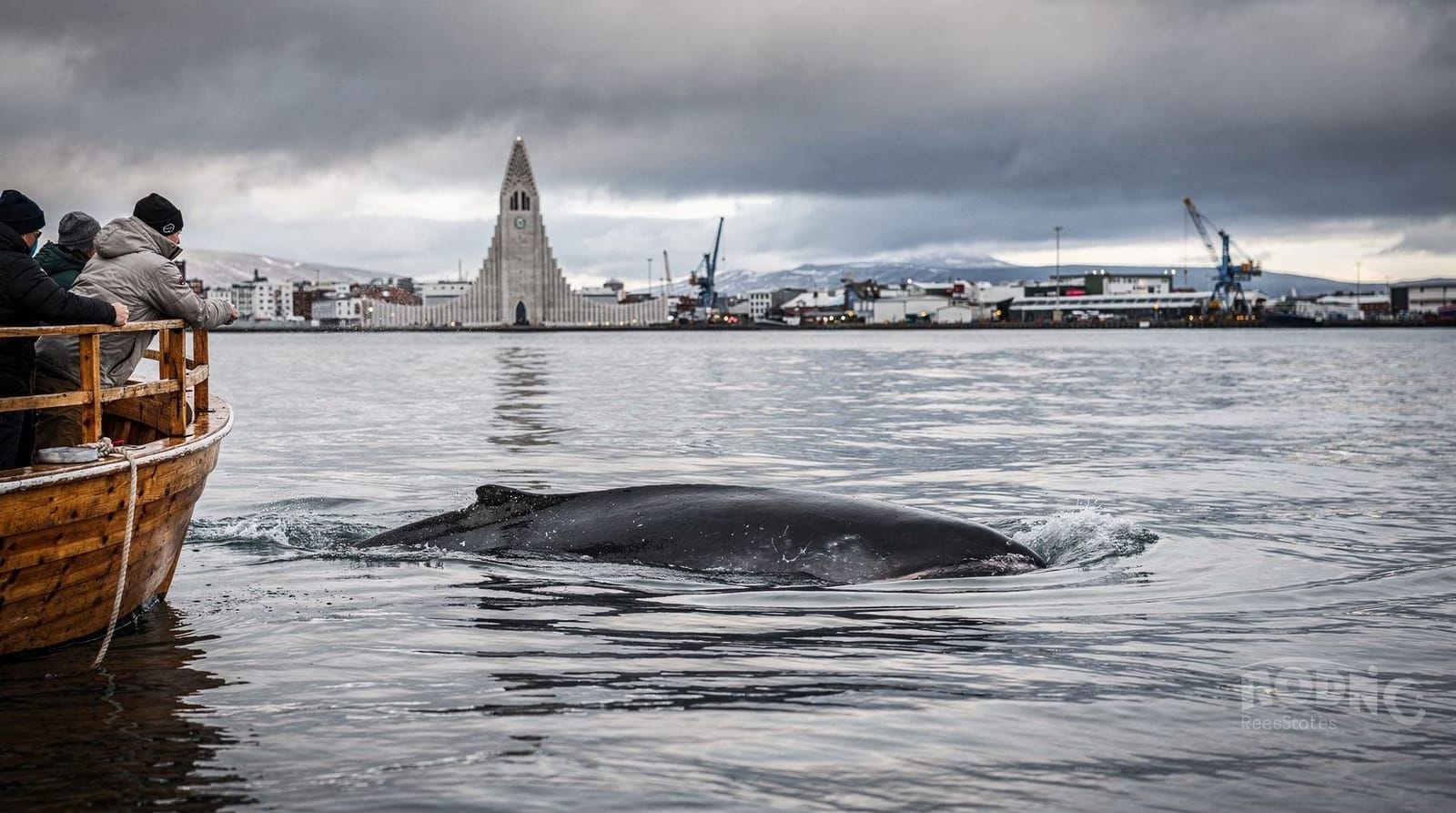
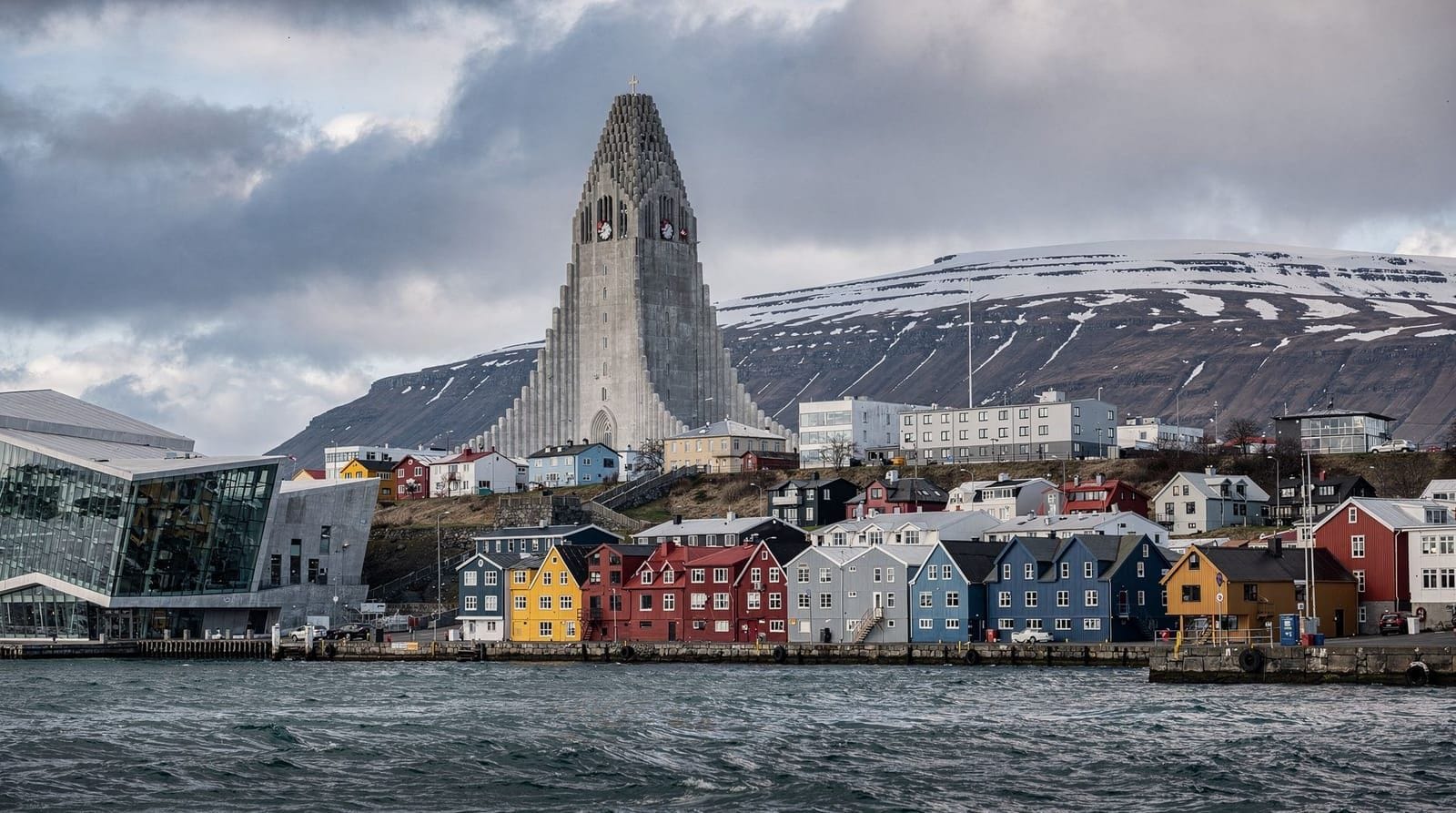
The typical tour lasts 3 hours (2 hours at sea) and departs from Ægisgarður pier, walking distance from downtown Reykjavik and the Harpa concert hall. You board a traditional wooden vessel or modern catamaran, motor out 15–25 minutes into the bay, and then cruise in search of whale activity.
What you are likely to see in summer:
- Minke whales: The staple sighting — typically 5–10 m long, surfacing regularly to breathe. You may see multiple individuals in a single tour.
- Harbor porpoise: Small, fast, often seen in groups near the harbor mouth.
- White-beaked dolphins: Common in Faxaflói, acrobatic and photogenic.
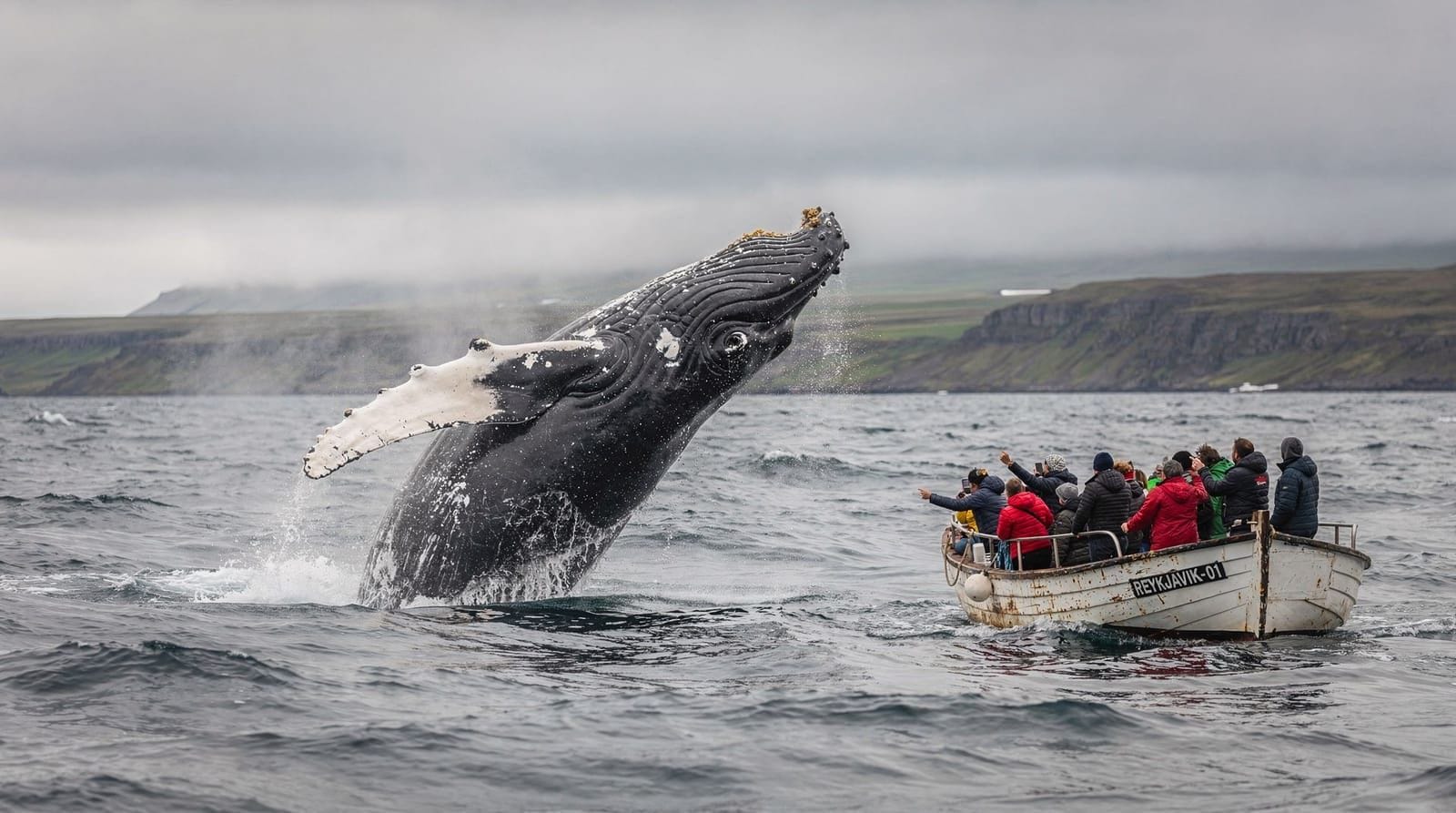
- Humpback whales: Less frequent but spectacular when present — breaching behavior seen on some tours.
What you might see but should not count on:
- Orca (killer whales): Occasional, not reliably present in the bay.
- Fin whales (second-largest animal on Earth): Rare in Faxaflói but documented.
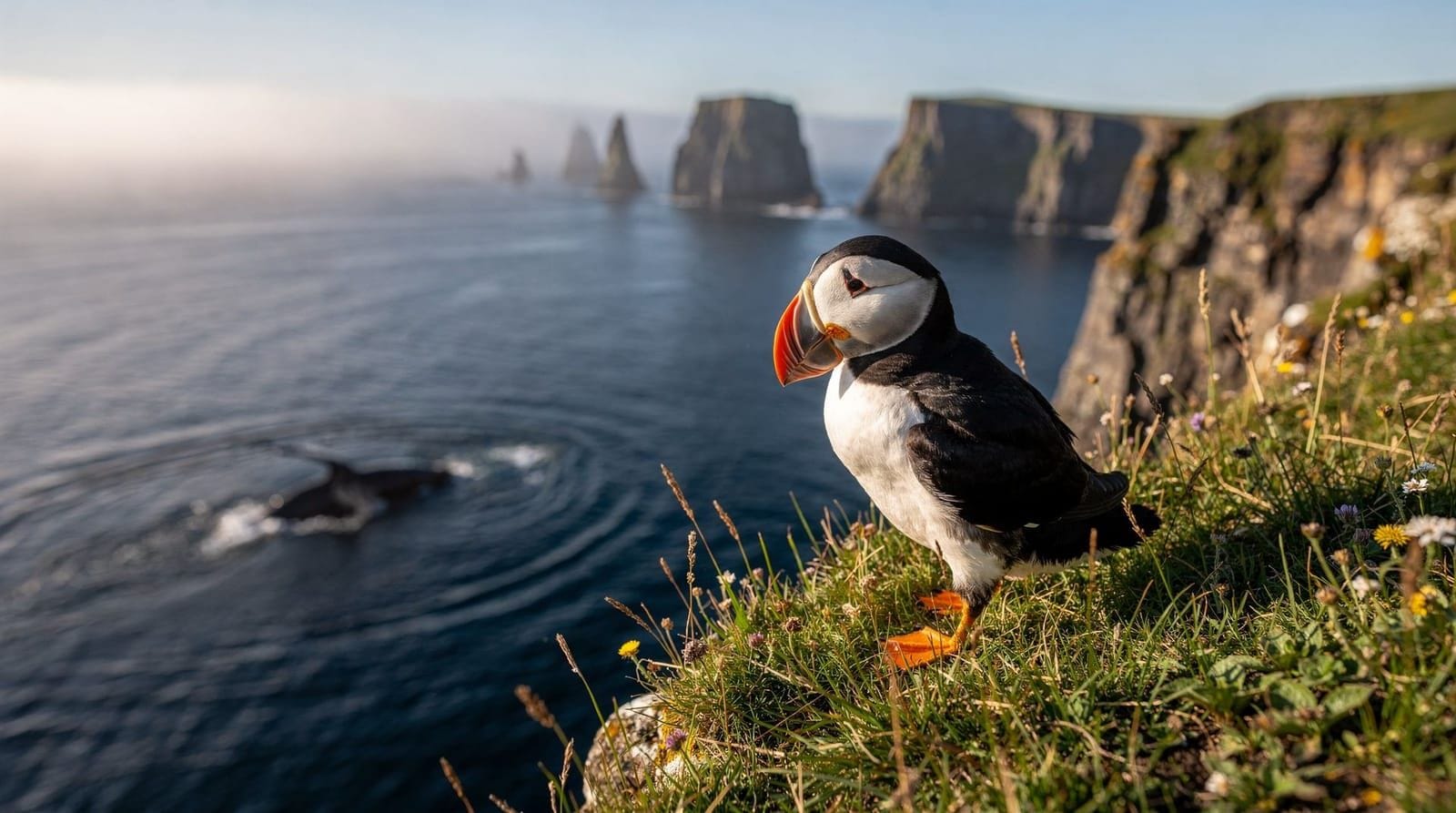
- Puffins: The Lundey/Puffin Island area is near the whale watching zone; puffin-combo tours visit it on the way.
Tour formats and what you pay
Traditional whale watching (3 hours) The standard format. Large, stable traditional vessels (converted fishing boats) or purpose-built whale watching catamarans. Warm inside cabin available. Hot drinks served on board. Group sizes typically 30–100 passengers.
Cost: ISK 11,000–13,500 per adult (~€72–88).
RIB speedboat express (2 hours) High-speed rigid inflatable boat. You dress in a full survival suit (provided) and travel faster to the whale watching zone. More intense experience, higher spray, considerably rougher ride. Not suitable for young children, pregnant travelers, or those with back problems. Smaller groups (8–12 people).
Cost: ISK 14,000–16,000 per adult (~€92–105).
Whale watching plus puffins combo Extends the route to include Lundey (Puffin Island), a small island with tens of thousands of Atlantic puffins nesting May through August. Adds 45–60 minutes to the tour. Best April through mid-August when puffins are present.
Cost: ISK 13,000–15,000 per adult (~€85–99).
Midnight sun whale watching (summer only) Departures at 9 PM–10 PM in June and July. The midnight sun makes for extraordinary photography — golden light on calm water, whales surfacing against a pale yellow horizon. Highly recommended if you are visiting in June or July.
Cost: ISK 12,000–14,000 per adult (~€79–92).
Reykjavik vs. Husavik: an honest comparison
The whale watching in Husavik guide covers the north Iceland option in detail, but a brief comparison:
Husavik advantages:
- Historically the highest sighting rates in Iceland
- Access to Skjálfandi Bay, where humpback whales are consistently present in summer
- Smaller, more specialist operators with marine biologist guides on some tours
- Traditional oak boats with genuine character
Husavik disadvantages:
- 5 hours from Reykjavik by car (or a domestic flight from Reykjavik to Akureyri)
- Higher cost when you factor in the detour
- Not practical unless you are already doing a north Iceland itinerary
Verdict: For most visitors staying in Reykjavik with limited time, Reykjavik whale watching is excellent in summer and not worth skipping in favor of a long detour. If you are planning to visit North Iceland anyway, add a whale watching tour in Husavik.
What to expect on the day
Boarding: Tours depart from Ægisgarður pier in the Old Harbour, a 15-minute walk from Laugavegur shopping street. Most operators have an onboard check-in process; arrive 15–20 minutes before departure. Thermal overalls and life jackets are provided at no extra cost — change into them before boarding.
On the water: The boat motors into Faxaflói Bay. Guides use radio communication between vessels to track whale positions. When a whale is spotted, the boat positions carefully to avoid disturbing the animal. Guides narrate behavior, species ID, and conservation context.
Photography tips: Bring or rent a camera with 200mm+ zoom for whale shots. Phone cameras struggle with the distance and speed of whale surfacing. A polarizing filter reduces sea glare significantly.
No-show policy: Most reputable operators offer a free return trip if no whales are sighted. Confirm this at booking — it is standard among established companies.
Seasickness: realistic assessment
The Old Harbour in Reykjavik is naturally sheltered. In fair summer weather, seas in Faxaflói are typically gentle with a light swell. The large traditional vessels handle this well. In stronger conditions (common in autumn and winter), the swell increases and the larger vessels are noticeably more comfortable than RIB speedboats.
If you are prone to seasickness:
- Book a traditional vessel (not a speedboat)
- Take Dramamine or Bonine one hour before departure
- Stay on deck in fresh air; avoid going below
- Keep eyes on the horizon
The crew are experienced with seasick passengers and will assist. The harbor area is safe.
Puffin-watching context
Atlantic puffins nest on Lundey (Puffin Island) in Faxaflói Bay from late April through early August. The island is a 20-minute boat ride from the Old Harbour. Puffin-combo whale watching tours pass by Lundey on the outward or return leg.
From mid-August, puffins leave their colonies and return to the open ocean — puffin-only tours cease. Pure whale watching continues through October.
If puffins are a priority, aim for May through July. Read the puffin watching guide for colony timing and locations beyond Reykjavik.
Sighting rates and puffins by month
| Months | Whale sighting rate | Puffins at Lundey | Notes |
|---|---|---|---|
| May–Aug | 90–97% | Present | Peak season, midnight sun departures available Jun–Jul |
| Sep | 85–90% | Leaving by early Sep | Good balance of sightings and smaller crowds |
| Oct | 75–85% | Gone | Last reliable month before winter swell increases |
| Nov–Apr | 60–75% | Gone | Rougher seas, fewer departures, traditional vessels recommended |
For a fuller picture of how whale and puffin timing interacts with the rest of an Iceland trip, see the best time for whales and puffins guide.
Practical details
- Location: Ægisgarður pier, Old Harbour, Reykjavik (near Kolaportið flea market)
- Season: Year-round, best May–September
- Duration: 2–3 hours at sea
- What to bring: Warm layers (even in summer, open water is cold), camera with zoom, seasickness medication if needed
- Thermal suits: Provided free by all reputable operators; you wear these over your own clothing
- Accessibility: Traditional vessels are more accessible than RIBs; confirm with operator for wheelchair users
What marine biology guides add to the experience
Standard whale watching tours have a driver-guide who handles logistics and provides basic commentary. Premium tours include a marine biologist or trained naturalist who can discuss:
- Species identification in real time (different surfacing patterns, fin shapes, blow characteristics)
- Feeding behavior — when a whale is bubble-net feeding versus traveling versus resting
- Population status — minke whale population in Faxaflói, how individual whales are identified by researchers
- Iceland’s complex relationship with whale watching and commercial whaling
This additional layer makes a significant difference to the experience. The extra cost of a naturalist-led tour (typically ISK 2,000–4,000 per person premium) is worthwhile for wildlife-focused travelers.
Photography on the water: Whale surfacing events last 2–5 seconds. The guide calls out when a surfacing is likely (usually when the whale has been below for 8–12 minutes). Position yourself on the bow or upper deck for the best angles and minimal boat-rail obstruction. Pre-set your camera or phone to burst mode to capture the brief surfacing moment.
Whale watching beyond Reykjavik and Husavik
Reykjavik and Husavik are the two dominant whale watching hubs, but they are not the only options. Akureyri, in the north, runs whale watching tours into Eyjafjörður, a long fjord that sees regular humpback activity in summer and is a practical add-on for anyone already spending time in North Iceland. Boats departing from the Westfjords and Snaefellsnes also see whales opportunistically, though neither region markets whale watching as a primary activity in the way Reykjavik and Husavik do. The whale watching in Iceland guide rounds up every region with realistic expectations for each, which is useful if your itinerary doesn’t route through the capital or the north at all.
Whale watching in context of Reykjavik activities
The Old Harbour (Gamla Höfn) where whale watching tours depart is adjacent to the Kolaportið flea market (weekends only), several of Reykjavik’s best restaurants (Matur og Drykkur for traditional Icelandic, Fiskfélagið for creative seafood), and Harpa concert hall. Combining a morning whale watching tour with an afternoon in this area makes a well-balanced day.
For visitors doing the full Reykjavik 48-hour itinerary, whale watching typically fits best on the first afternoon — you are in the city, the departure point is central, and you return with energy for dinner. The Reykjavik destination guide covers the wider city context.
Frequently asked questions about whale watching in Reykjavik
What is the sighting success rate?
In summer (May–September), leading Reykjavik operators report 90–97% sighting rates for cetaceans of some kind — typically minke whale and/or dolphin. Winter rates fall to 60–75%, with rougher seas.
Can children join whale watching tours?
Yes. Traditional vessel tours accept children of all ages; infants are free, children under 7 are heavily discounted. RIB speedboat tours typically require children to be at least 8 and able to hold on independently. Always confirm the operator’s minimum age policy.
Is whale watching ethical?
This question comes up often and is worth addressing honestly. Reputable Icelandic operators follow the North Atlantic Marine Mammal Commission guidelines: approach no closer than 100 m, engines off or idle when close to whales, no chasing or cutting off movement paths. Iceland is a signatory to international whale watching codes. The marine biologist-certified guides on premium tours typically include conservation context and whale ID research in the commentary.
Iceland’s whale watching industry and its whaling industry are genuine contradictions — Iceland still hunts minke and fin whales commercially. This is a legitimate concern for visitors. The whale watching sector has publicly advocated against continued hunting on economic grounds.
How far in advance should I book?
In summer peak (June–August), booking two to five days ahead is sensible for specific departure times. Same-day booking is often possible in shoulder season. Midnight sun departures sell out faster than morning slots.
Which is better for beginners: traditional vessel or speedboat?
Traditional vessels are the better choice for most first-timers, families, and anyone prone to seasickness — they’re more stable, warmer, and less physically demanding. Speedboats suit travelers who specifically want a faster, more intense ride and are comfortable with rougher conditions and full survival suits.
What happens if no whales are seen?
Most reputable operators offer a free return trip if the tour records no cetacean sightings at all. Confirm this policy at booking — it’s standard practice among established Reykjavik companies and reflects genuine confidence in their success rates.