Icelandic coffee culture — why Iceland is one of the world's top coffee-drinking nations
Is Iceland known for good coffee?
Yes. Iceland consistently ranks among the world's top five coffee-consuming nations by volume per capita. Reykjavík has a well-developed independent café scene. Prices are high — ISK 700–900 for an espresso-based drink — but quality is generally good, particularly at the better independent cafés on Laugavegur and surrounding streets.
| Where | Reykjavik (best scene), Akureyri (decent), petrol stations everywhere else |
| Cost | Around ISK 650–950 for an espresso-based drink |
| Best for a serious cup | Reykjavík Roasters, Kaffibrennslan, Sandholt |
| Best for cheap/quick | N1 or Olis petrol station coffee, ISK 300–450 |
| Hours | Most cafés 08:00–18:00; a handful open to 22:00 |
Iceland’s coffee identity
Iceland is not usually the first country that comes to mind in discussions of coffee culture. Scandinavia, Italy, and the specialty coffee capitals of the world — Melbourne, Oslo, Tokyo — dominate those conversations. But Iceland sits in the global top five for coffee consumption per capita, a fact that surprises most visitors and reflects something real about the culture.
The context: Iceland’s climate — dark, cold, and often rainy for much of the year — creates conditions where warm beverages are a social anchor. The coffee break (kaffitími) is institutionalised in Icelandic workplaces. Cafés serve as social gathering points in a way that bars do in other cultures. And the combination of a relatively affluent population, a quality-oriented culinary scene, and international connectivity has produced a café environment that is genuinely good by global standards.
Iceland has no coffee-growing tradition — all beans are imported. The emphasis is on roasting, preparation, and the café experience itself.
The coffee landscape in Reykjavík
Kaffitár
The dominant national coffee chain. Founded in 1990, Kaffitár was the first company to bring specialty coffee culture to Iceland. It now has around 20 outlets across the country, including one at Keflavík Airport. The roasting is done in Iceland and the quality is consistently good for a chain operation.
The house espresso blend is reliable. Flat white, cappuccino, and Americano are the most ordered drinks. ISK 650–900 per drink. A good option for the first coffee of the day at the airport or when you need a reliably decent cup in a new neighbourhood.
Kaffitár also sells its roasted beans at its shops and Vínbúðin, which is useful if you are self-catering with a cafetière.
Te & Kaffi
The second major chain, with a similar footprint and quality level to Kaffitár. Slightly more emphasis on the tea side (the name translates as “Tea and Coffee”). Good for reliable quality. ISK 650–900 per drink.
Reykjavík Roasters
The most serious specialty coffee operation in Iceland, with a roastery and café on Brautarholt and a second location on Kárastígur. If you care about the specifics of coffee — origin, roast profile, brewing method — this is the reference address in Reykjavík.
Single-origin filter coffee, seasonal rotating espresso blends, and proper barista technique. ISK 700–1,000 per drink. Their roasted beans are available to buy and travel well.
Kaffibrennslan (Laugavegur 21)
One of Reykjavík’s longest-established independent cafés. Good for a long sit with a laptop, decent coffee at ISK 700–900, and a range of light food (sandwiches, pastries, skyr cake). The Laugavegur location is useful as a base between sights in central Reykjavík.
Stofan Kaffihús (Vesturgata 3)
A relaxed, book-lined café in a converted shop in the old part of the city centre. Popular with both locals and visitors. Good for a slow afternoon coffee. ISK 700–850 for espresso drinks.
C is for Cookie (Týsgata 8)
A small, cheerful bakery-café known for excellent cinnamon rolls and cookies alongside good coffee. The cinnamon rolls (ISK 700–900) are among the better versions in Reykjavík. Limited seating.
Sandholt (Laugavegur 36)
The best bakery in Reykjavík, with a café attached. Excellent pastries — croissants, Danish pastries, Icelandic kleinar (fried twisted pastry) — alongside good espresso and filter coffee. ISK 700–900 for drinks, ISK 500–1,200 for pastries. Worth visiting for breakfast.
Chain vs independent: which to choose
| Chains (Kaffitár, Te & Kaffi) | Independent cafés (Reykjavík Roasters, Kaffibrennslan) | |
|---|---|---|
| Consistency | High — same quality at every branch | Variable, but often higher ceiling |
| Speed | Fast, good for airport/transit stops | Slower, meant for sitting in |
| Price | ISK 650–900 | ISK 700–1,000 |
| Atmosphere | Functional, efficient | Distinctive, often a destination in itself |
| Availability | Nationwide, including Keflavík Airport | Concentrated in Reykjavík and Akureyri |
Neither is “better” outright — chains are the right call for a quick, reliable cup between sights, while the independents are worth a dedicated stop when coffee itself is part of the day’s plan. If your Iceland trip is mostly about the Icelandic food scene generally, pair a café stop with a meal at one of the best restaurants in Reykjavík rather than treating them as separate errands.
The kaffitími tradition
Icelanders take coffee breaks seriously. The kaffitími (coffee time) is a scheduled break in most workplaces, typically twice daily, involving both coffee and something to eat — a piece of cake, a kleina pastry, or a sweet bun. This is a social occasion, not just a caffeine delivery mechanism.
The culture extends to visits: when you enter an Icelandic home or workplace, you will typically be offered coffee. Refusing is impolite. Drinking it slowly and accepting a second cup is expected. This cultural context explains part of why coffee consumption is so high — it is embedded in social rituals that happen multiple times daily.
Coffee prices and budget considerations
Coffee in Iceland is not cheap. Prices in Reykjavík cafés:
- Espresso (single): ISK 500–650
- Americano/black coffee: ISK 650–800
- Flat white/latte/cappuccino: ISK 700–950
- Filter coffee (200ml): ISK 500–700
- Iced coffee: ISK 800–1,100
The cheapest coffee in Iceland comes from N1 petrol stations and 10-11 convenience stores: ISK 300–450 for a functional espresso or black coffee. Not specialty, but entirely adequate for a quick morning cup.
If you are making your own coffee while self-catering, supermarkets (Bónus, Krónan) stock Kaffitár and generic roasted beans at reasonable prices. A 500g bag runs ISK 1,500–2,500.
Coffee in Iceland outside Reykjavík
The quality of coffee drops significantly outside the capital, as it does in most countries. What to expect by region:
Akureyri: Iceland’s second city has a decent café scene relative to its size. Kaffi Ilmur and Bláa Kannan (the Blue Jug) are established cafés with reasonable quality. ISK 650–850 per drink.
Golden Circle area: The Laugarvatn Fontana café and the Friðheimar farm café both serve decent coffee as a secondary offering. Petrol station coffee is the fallback elsewhere on the route.
South Coast: Limited options outside the main service towns. Vík has a small café scene. Kirkjubæjarklaustur has basic café options.
Ring Road in general: Petrol station cafés at N1 and Olis are the consistent fallback. For quality, accept the tradeoff and save specialist café visits for Reykjavík and Akureyri.
What to drink with your coffee
Kleina: The traditional Icelandic pastry — a fried twisted dough, slightly sweet, with a dense texture. Versions range from delicate bakery kleinar (ISK 350–500 at Sandholt) to sturdier versions at petrol stations. An acquired texture but very Icelandic.
Skyr cake (skyrkaka): Found at most Reykjavík cafés. A dense, mildly tangy cheesecake-style dessert using skyr as the base. ISK 700–1,200 per slice. Often served with berries.
Vínarterta: A traditional layered cake from the 19th century with prune jam between pastry layers. Less common than it once was but still found at traditional cafés and bakeries. Very sweet.
Snúður: Cinnamon roll. Iceland’s bakery scene has good versions — Sandholt and C is for Cookie are the reference points in Reykjavík.
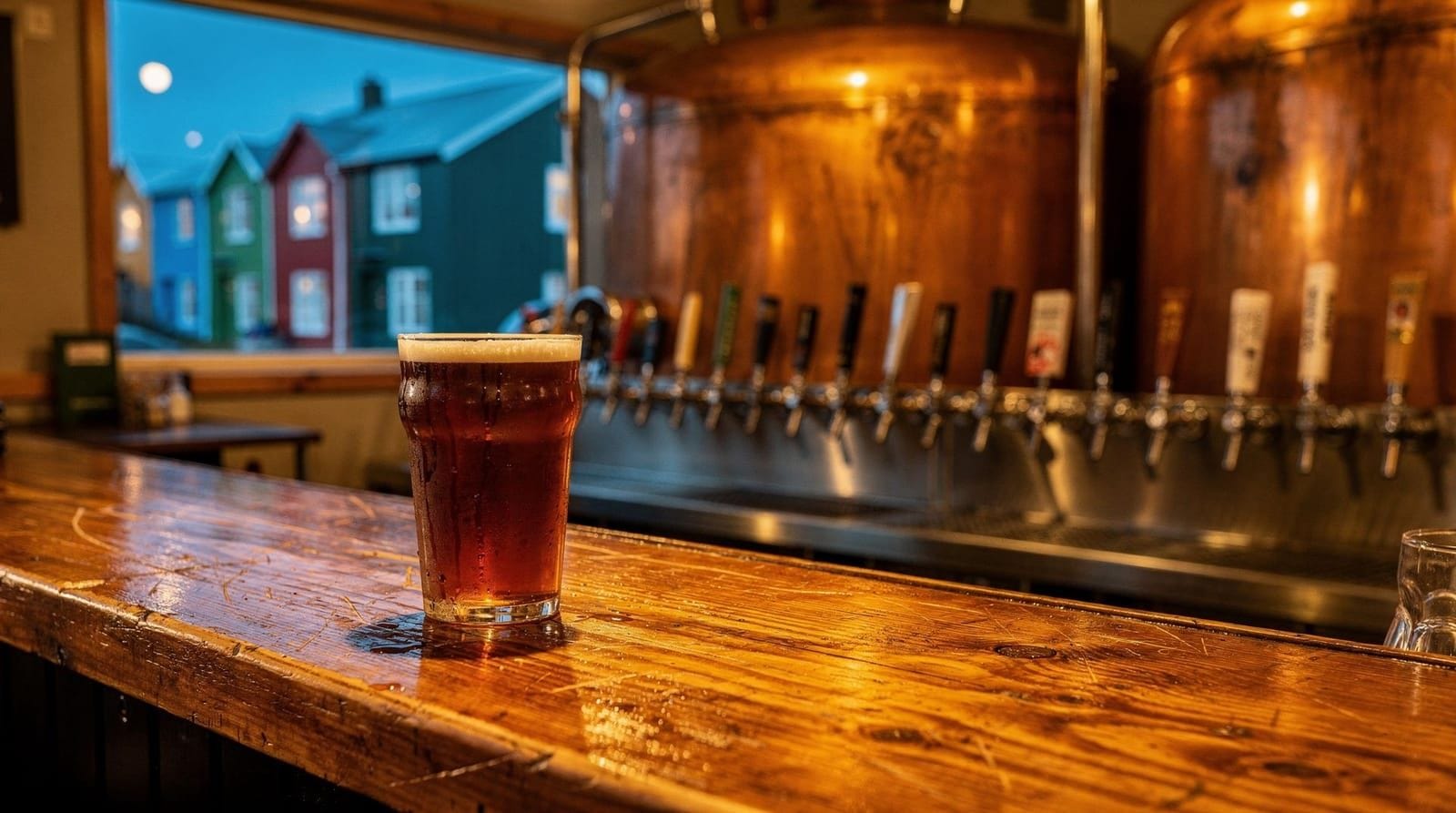
If beer rather than coffee is more your thing for an afternoon out, the Icelandic craft beer guide covers Reykjavík’s brewery taprooms — several, like Bryggjan Brugghús, run a similar café-by-day, taproom-by-evening model.
A coffee-focused half-day in Reykjavík
If you want to build a short itinerary around the café scene rather than treat it as incidental, a workable half-day looks like this: start at Reykjavík Roasters or Kaffibrennslan for a proper single-origin filter coffee and to watch the roasting/brewing process if timing allows; walk Laugavegur and Skólavörðustígur, stopping at Mokka for the historical atmosphere and a waffle; finish at Sandholt for a pastry and a second coffee before heading to your next activity. This covers roughly 2–3 hours, fits comfortably around Hallgrímskirkja and the landmarks walk, and works equally well on a rainy day when outdoor sightseeing is less appealing.
Bringing coffee habits home
Visitors who get into the Icelandic filter-coffee-at-any-time habit sometimes want to replicate it at home. Reykjavík Roasters’ and Kaffitár’s beans both travel well as vacuum-sealed retail bags — buy them in the city rather than at the airport, where selection is limited post-security. A simple pour-over setup (or an AeroPress, which also works well for Ring Road self-catering) reproduces the light, filter-forward style that dominates Icelandic home coffee, as distinct from the darker roasts common in southern Europe.
Frequently asked questions about Icelandic coffee culture
Why does Iceland drink so much coffee?
Several factors: the dark and cold climate makes hot beverages a comfort necessity for much of the year; the kaffitími (coffee break) is culturally embedded in work and social routines; and Iceland’s relatively high income levels support frequent café visits. The combination produces one of the world’s highest per-capita coffee consumption rates.
Is Icelandic coffee culture similar to Scandinavian coffee culture?
Yes, with some differences. Like Norway and Sweden, Iceland favours lighter roasts and filter coffee at home. The commercial café scene has adopted the same specialty coffee conventions as other Nordic cities. Iceland’s isolation and small market means fewer of the international specialty chains — Starbucks has never opened in Iceland — which has helped the independent café scene remain dominant.
Are there any Icelandic coffee brands I can take home?
Kaffitár is the main Icelandic specialty roaster and their beans are available at their shops and at Vínbúðin. Reykjavík Roasters also sells roasted beans. Both travel well in sealed bags. Keflavík Airport has limited selection after security — buy at a shop in Reykjavík before departing if you want beans to bring home.
What is the most popular coffee order in Iceland?
Flat white and Americano are both extremely common. Filter coffee (drip coffee) is the traditional home drink. At workplaces, the simplest preparation — strong filter coffee — remains the norm.
Is there a Starbucks in Iceland?
No. Starbucks has never opened in Iceland and there are no current plans to do so. The market is too small and the quality bar in the domestic café scene is high enough that a global chain faces a difficult entry point.
What hours do Reykjavík cafés operate?
Most cafés open around 08:00–09:00 and close between 17:00 and 19:00 on weekdays, slightly extended hours on weekends. Some, particularly near Laugavegur, stay open until 22:00. This is not a late-night café culture — for food and drinks after 20:00, bars and restaurants are the relevant option.
Is it normal to bring your own reusable cup in Iceland?
Yes, and it’s increasingly encouraged. Most Reykjavík cafés happily fill a reusable cup and some offer a small discount for doing so, in line with Iceland’s broader environmental positioning. It isn’t required, but if you’re travelling with one anyway, it’s a welcome, unremarkable habit here.
Can I get good coffee on a Ring Road self-drive trip, or should I bring my own?
Café-quality coffee becomes sparse outside Reykjavík and Akureyri — expect petrol station coffee for most of a Ring Road trip. Bringing pre-ground Reykjavík Roasters or Kaffitár beans and a compact AeroPress or pour-over is a genuinely popular workaround among self-caterers, and solves the problem entirely for breakfast at guesthouses along the route.
Coffee culture and the Icelandic creative scene
Reykjavík’s cafés have historically been closely associated with the city’s creative and intellectual communities. In a small capital with limited physical infrastructure for culture — no ancient bookshops, no legacy café-as-salon culture like Vienna — the function has been transferred to independent cafés and bookshop-café combinations.
Máls og menningar bookshop café: A bookshop on Laugavegur that doubles as a café. A good selection of Icelandic-language books alongside international titles, coffee at reasonable prices, and a genuinely contemplative atmosphere. One of the best rainy-day stops in Reykjavík.
Café Babalu (Skólavörðustígur 22a): A small, colourful café with mismatched furniture, board games, and a genuinely eccentric character. Popular with artists and writers. Excellent tea selection alongside coffee. ISK 700–900 for drinks, ISK 800–1,500 for food.
Mokka (Skólavörðustígur 3a): Iceland’s oldest café, founded in 1958. The interior has barely changed since opening. Reportedly the first place in Iceland to serve espresso. The waffles with jam and cream (ISK 1,200–1,600) are the thing to order. A genuine historical institution.
Coffee sustainability in Iceland
Iceland has no domestic coffee production — all beans are imported. The specialty coffee scene has followed the global movement toward direct-trade relationships with farms, and Reykjavík Roasters in particular has built direct sourcing relationships with farms in Ethiopia, Central America, and other producing regions.
Iceland’s environmental record in energy — essentially all electricity from geothermal and hydroelectric sources — means that roasting and brewing operations have a lower emissions footprint than cafés in fossil-fuel-dependent countries. The carbon footprint of a Reykjavík flat white is primarily the international shipping of the beans.
If coffee sustainability is a consideration in your travel, Iceland’s café scene is better positioned than most on the energy side, though bean sourcing varies by roaster.
Icelandic coffee during the midnight sun
One of the genuinely unusual aspects of Reykjavík café culture in summer is the light. At the summer solstice, it does not get dark in Reykjavík — the sun sets briefly around midnight and rises again by 03:00. Cafés that stay open until 21:00 or 22:00 are doing so in full daylight. The concept of “evening coffee” feels different when the sun is still well above the horizon at 21:30.
This affects sleep patterns for many visitors. The midnight sun Iceland guide covers the practical aspects of visiting during 24-hour daylight, including its effect on eating, sleeping, and scheduling.
In winter — the reverse situation, with only 4–5 hours of daylight — cafés take on a different character. The warmth and light of a café on a dark, cold January afternoon is more essential, not optional. Café culture peaks in terms of social function in the dark months.
Coffee in Icelandic hotels
Most hotels and guesthouses in Iceland provide in-room coffee facilities — typically Nespresso machines or filter drip coffee setups. The quality varies significantly. Higher-end hotels tend to use Kaffitár capsules or pods. Budget guesthouses may provide generic instant coffee.
For visitors who need a reliable good coffee in the morning, bringing a small AeroPress and a portable hand grinder (or pre-ground beans from Reykjavík Roasters) is a practical option for Ring Road travel, where café options become sparse.
Hotel breakfast coffee is typically a self-service setup with filter coffee and a machine for espresso-based drinks. Kaffitár machines are common at hotel breakfasts across Iceland.
The cultural intersection of coffee, hot pots, and conversation
If there is a unifying thread to Icelandic social culture, it is the value placed on conversation — in geothermal hot pots at municipal pools, in the kaffitími break at work, at kitchen tables with coffee and kleina. Iceland’s small size (370,000 people total) produces a social environment where many conversations cross professional, social, and generational lines in ways that are unusual in larger countries.
As a visitor, the two best places to experience this are the municipal swimming pool hot pot (ISK 1,250, involves being in warm water with strangers, essentially requires willingness to be sociable) and a neighbourhood café mid-morning on a weekday when the kaffitími crowd is there. Neither requires Icelandic language — English is spoken universally by Icelanders under 60 and adequately by most older adults.
The Reykjavík culture guide covers the wider social and cultural landscape if you want more context on what makes Icelandic urban life distinctive.
Iceland’s role in the Nordic coffee identity
Iceland sits within a broader Nordic coffee culture that consistently produces among the highest per-capita coffee consumption rates in the world. The context helps explain why even a small country with 370,000 people has developed such a sophisticated café scene.
Nordic coffee culture shares a common foundation: high-quality light-to-medium roasts, technically precise brewing, and coffee as a social institution rather than a quick morning stimulant. But Iceland adds its own elements — the dramatic daylight variation (continuous sun in summer, nearly continuous dark in winter) and the geothermal socialising tradition mean that coffee occupies a specific cultural niche different from its Norwegian or Danish equivalents.
In January, Reykjavík cafés are refuge spaces — warm, lamp-lit, with condensation on the windows and strangers sharing tables in the easy Icelandic way. In June, those same cafés put chairs outside at 22:00 in full daylight, and people sit with coffee cups watching the never-setting sun with a particular quiet contentment that is hard to describe but easy to feel.
This seasonal contrast makes café visits in Iceland different depending on when you travel. Visiting in winter: the café interior experience is the thing — warmth, community, pastry. Visiting in summer: the midnight sun café culture, where time becomes elastic and a coffee at 23:00 feels entirely reasonable, is worth experiencing. Neither season is wrong for coffee tourism in Iceland.
For visitors from warmer or more southerly countries, Iceland’s café culture offers something genuinely different: a model for treating hot beverage consumption as a form of refuge and social infrastructure, built into the rhythms of a challenging climate rather than despite them.
Top experiences
Best-rated activities across GetYourGuide and Viator.

Reykjavík All In One Food Tour - Eat, Drink & Explore with Locals
- Viator

Akureyri Food Walk With 4-5 Tastings and a Local Guide
- Viator

Private Snæfellsnes Peninsula and local Lunch
- Viator
Akureyri: From Akureyri lake Myvatn guided tour with lunch
- GetYourGuide
Akureyri: Private walking tour
- GetYourGuide
Akureyri: Port city walk local food
- GetYourGuide