Silfra snorkeling: honest review for 2026
Reykjavik: Silfra snorkeling between two continents
Silfra is one of the few adventure activities in Iceland that genuinely can’t be replicated anywhere else on Earth — but at ISK 18,000+ for 30–45 minutes in near-freezing water, it isn’t a casual add-on. Here’s what a snorkeling tour actually includes, who it suits, and how the cold really feels.
| Where | Þingvellir National Park, ~40 km northeast of Reykjavik |
| Cost | ISK 18,000–27,000/person, plus ISK 750 park fee if self-driving |
| Time needed | Half-day: 15–20 min briefing, 30–45 min in water, plus travel |
| Getting there | Guided transport from Reykjavik, or self-drive Route 36 (~40 min) |
| Best time | Year-round; clarity doesn’t change with season |
What Silfra actually is
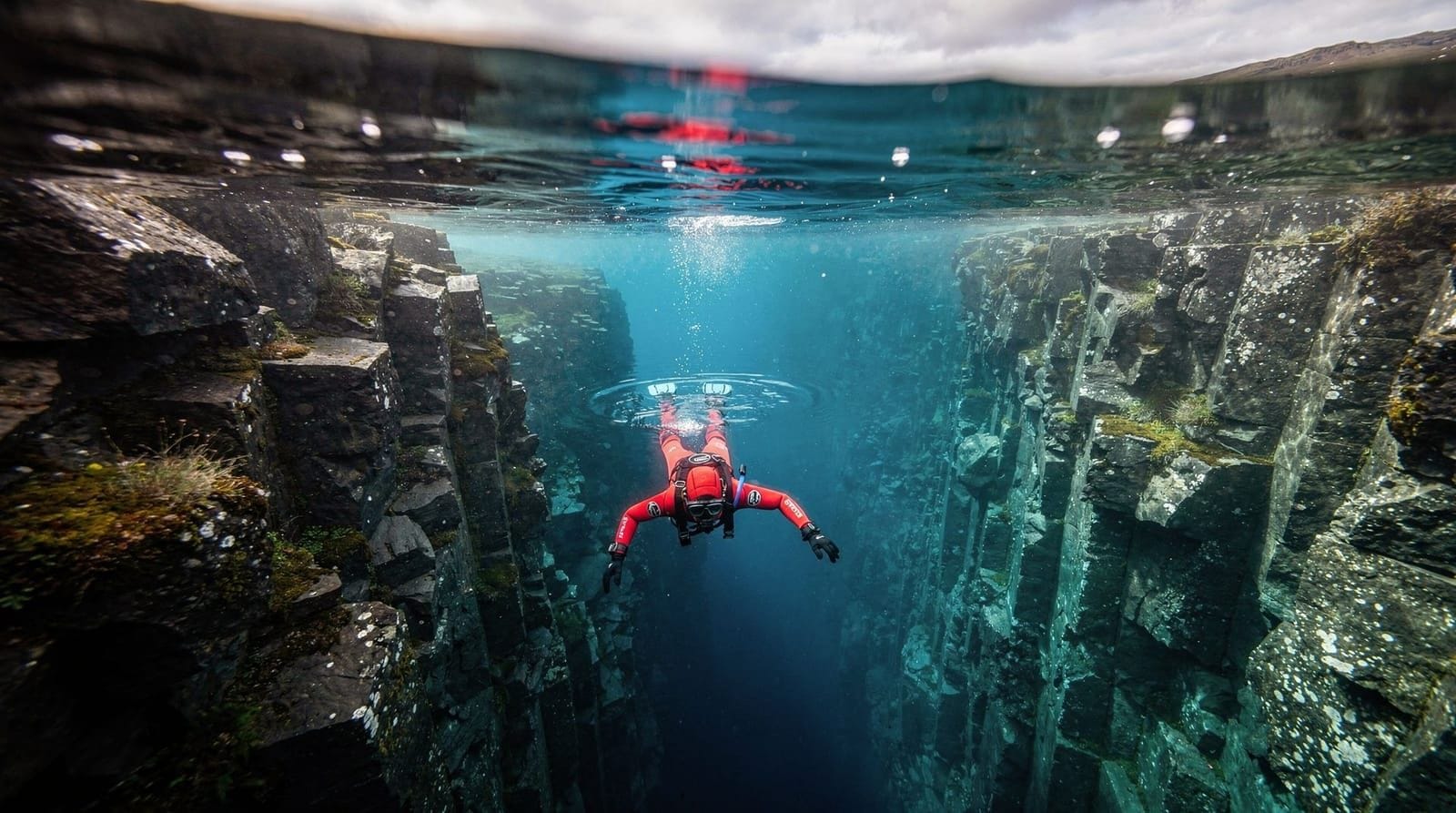
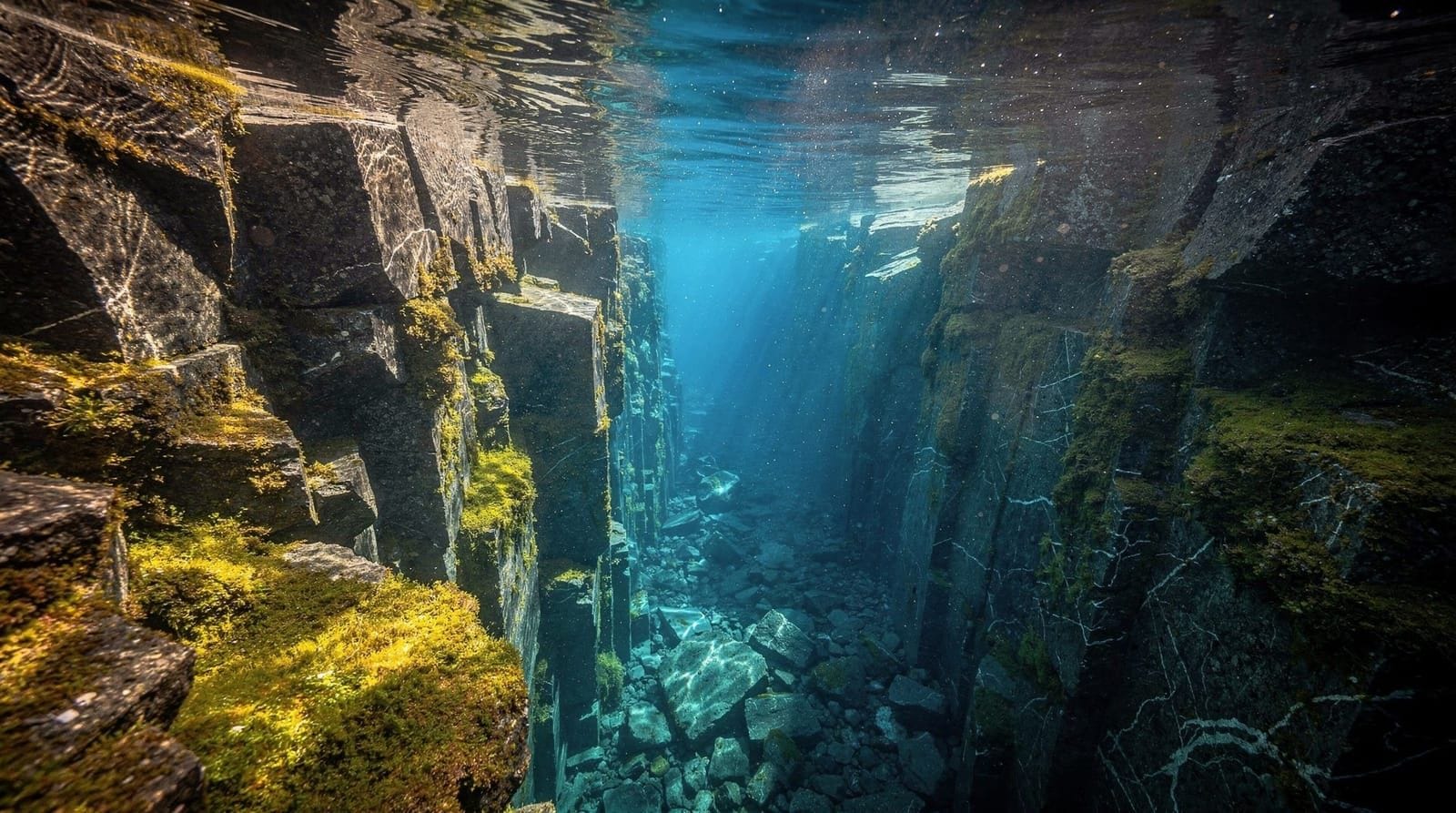
Silfra is a fissure (crack) in the earth’s crust inside Þingvellir National Park, filled with glacial meltwater from Langjökull ice cap. The water travels underground through lava rock for 30–100 years, emerging at Silfra filtered to extraordinary clarity.
The fissure sits precisely on the boundary between the Eurasian and North American tectonic plates, which are slowly moving apart at approximately 2 cm per year. Snorkeling in Silfra means swimming in the gap between continents — a geological fact, not a marketing metaphor. You can reach out and touch both tectonic plates simultaneously in one narrow section.
The fissure is roughly 1 km long with four main sections:
- Silfra Big Crack: The entrance, a wide open channel
- Silfra Hall: The widest section with the deepest water (up to 40+ m), best for divers
- Silfra Cathedral: A narrow, cathedral-ceiling channel with filtered blue light effects
- Silfra Lagoon: The shallow exit area with turquoise colors and soft lava sand bottom
The snorkeling route covers approximately 300–400 m of the fissure over 30–45 minutes in the water.
What you get on a Silfra tour
All certified Silfra snorkeling tours include:
- Drysuit fitting and instruction (15–20 minutes before entry)
- Guide-led snorkel through the fissure (30–45 minutes in water)
- Drysuit with insulating under-layers — you stay almost dry
- Fins and mask provided
- Wetsuit gloves and hood (hands and face still exposed to water)
- Guide assistance for the entire route
Not included in some packages:
- Underwater camera (rent or bring your own — water-resistant phone cases work for basic shots; a GoPro or underwater housing is better)
- Transfer from Reykjavik (available as add-on or via Golden Circle combo tours)
- Þingvellir National Park fee (ISK 750 per vehicle, paid at parking)
What you pay
| Option | Price (ISK) | Approx EUR |
|---|---|---|
| Standard Silfra snorkeling from Þingvellir | 18,000–22,000 | €118–145 |
| From Reykjavik with transport | 23,000–27,000 | €151–177 |
| Golden Circle + Silfra combo (full day) | 26,000–32,000 | €171–210 |
| Scuba diving Silfra | 25,000–35,000 | €165–230 |
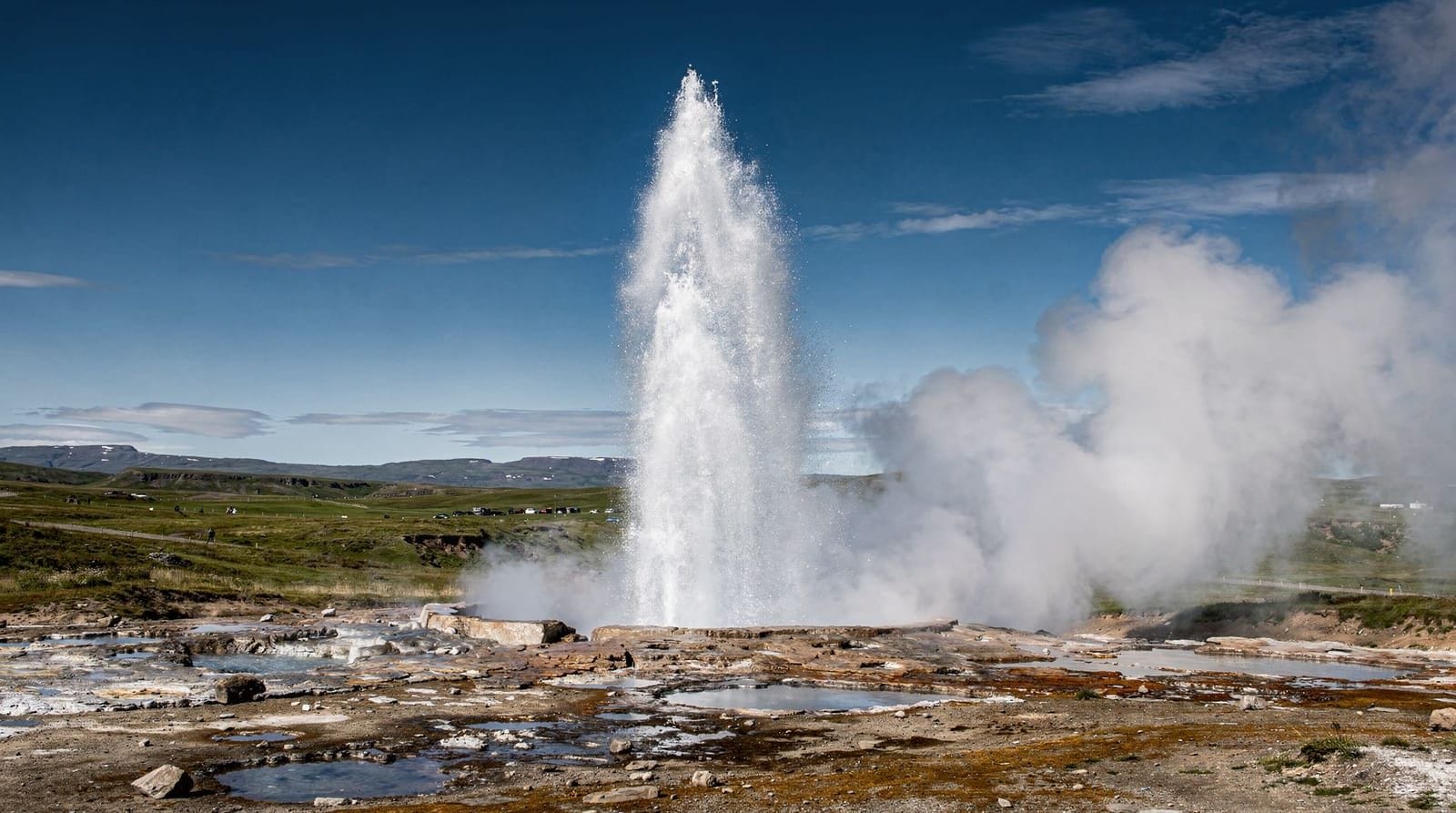
The Golden Circle combination tour is a full day well spent: you see Þingvellir, Geysir, and Gullfoss, then snorkel Silfra in the afternoon. The combination works geographically since Silfra is inside Þingvellir.
Honest assessment: is Silfra snorkeling worth it?
The case for going:
The water clarity is genuinely extraordinary and unlike anything found in warmer tourist diving locations. The blue-green corridor of Silfra Cathedral, viewed from inside, is one of those rare experiences that looks exactly as good in person as in photographs — arguably better. The tectonic plate setting adds a layer of geological context that most adventure activities lack.
For non-scuba divers, snorkeling Silfra is the most accessible version of this experience. The drysuit keeps you warm enough that the cold water is tolerable for most people. The 30–45 minutes in the water moves quickly.
The case against:
ISK 18,000–22,000 is a serious price point for 30–45 minutes of active experience. Budget travelers may prefer allocating the same money toward a night’s accommodation or a full-day tour elsewhere.
The cold is genuinely uncomfortable for people who run cold naturally. Even with a drysuit, exposed hands and face feel it. The guides will tell you that most guests adjust within five minutes — this is mostly true, but some people spend the entire time distracted by cold feet or hands.
Beginners who are not comfortable with their face in water may not enjoy the experience, as snorkeling requires confidence putting your face below the surface.
The drysuit difference
A drysuit is a sealed waterproof suit with tight seals at the wrists and neck. Unlike a wetsuit, which lets water in and relies on body heat to warm it, a drysuit keeps you dry. You wear an insulating undersuit underneath — typically a thermal onesie provided by the operator.
The result: your core stays warm and mostly dry. The seals at the wrists mean cold water contacts your hands. A thin neoprene hood and gloves are typically provided but do not eliminate face and hand cold entirely.
For the genuinely cold-sensitive: Bring or request thicker gloves. Some operators offer warmers for the fingers. Hot chocolate is usually served after the snorkel and greatly appreciated.
Logistics and planning
Þingvellir location: Silfra is a 10-minute walk from the Silfra parking area inside Þingvellir National Park, approximately 40 km northeast of Reykjavik.
Getting there: Self-drive via Route 36 (40 minutes from Reykjavik). Alternatively, book a transport-inclusive tour from Reykjavik, or a Golden Circle combo.
Best time: Year-round. The clarity does not vary seasonally. Summer offers warmer air temperatures and easier logistics; winter creates ice at the water’s edge that some find atmospheric.
Health restrictions: Operators will not admit pregnant guests. Those with heart conditions, high blood pressure, recent surgeries, or epilepsy should consult a doctor first. Minimum age is typically 12–14 years.
Important: Silfra requires advance booking — tours run at set times with limited groups (typically 6–8 snorkelers per guide). Walk-ups are not accepted.
What to bring
- Thermal underwear (thicker than you think you need — it goes under the drysuit)
- Waterproof socks (optional, but helps foot warmth)
- A dry change of clothes for afterward
- Water-resistant camera or underwater housing
- Small bag for valuables while in the water (left with guide)
- ISK 750 for Þingvellir parking if self-driving
The geology of Silfra: tectonic plates in practical terms
Silfra sits inside Þingvellir National Park, which itself sits in the rift valley between the Eurasian Plate (to the east) and the North American Plate (to the west). The plates diverge at approximately 2 cm per year — slow on a human timescale, fast in geological terms.
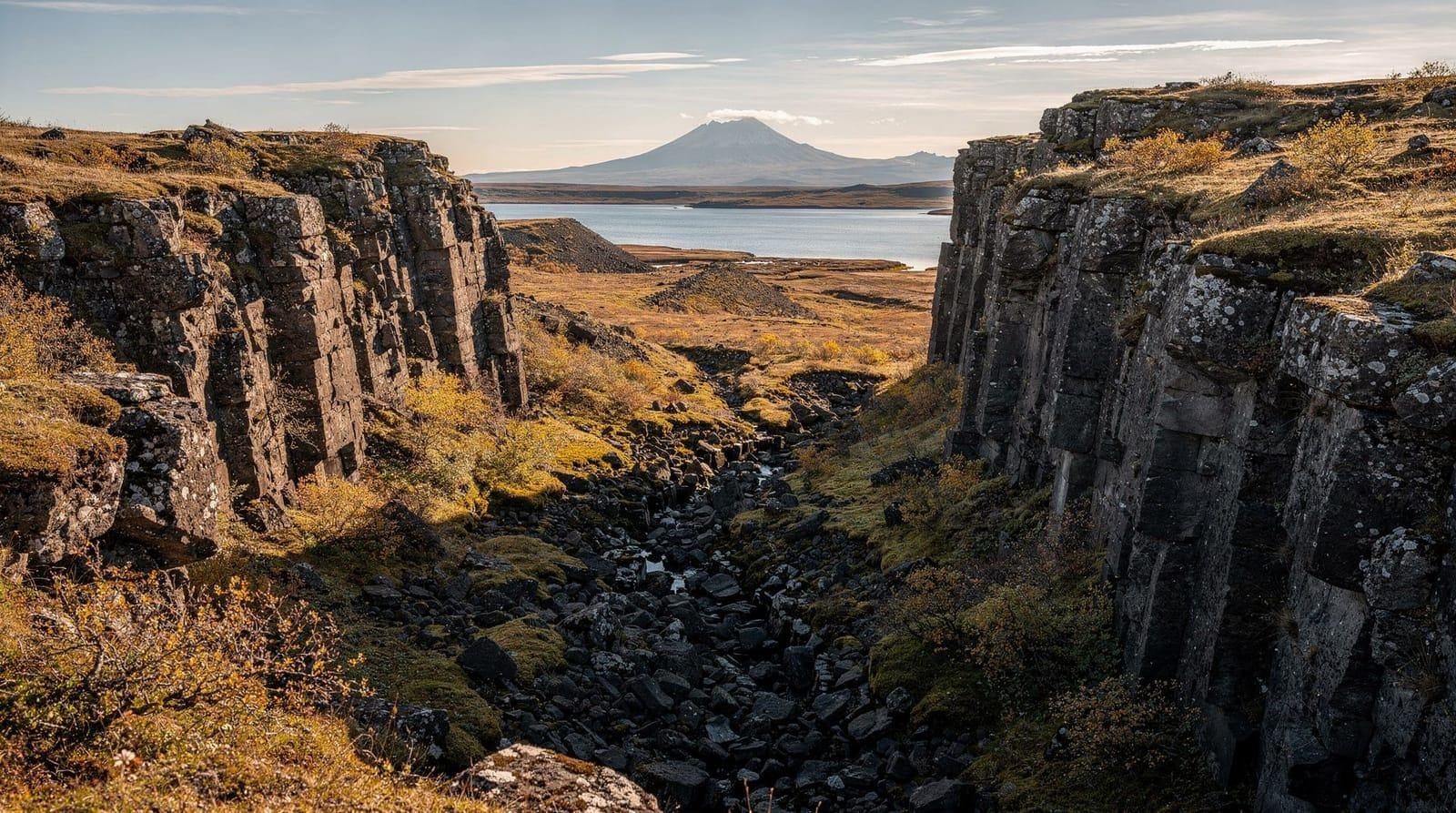
The rift valley is approximately 7 km wide at Þingvellir, formed by millions of years of spreading. The cliff walls that line the valley are the edges of the two continental plates. Silfra is one of the fissures that has formed as the plates pull apart and the land subsides between them.
The water in Silfra comes from Langjökull glacier (Iceland’s second-largest ice cap), located approximately 50 km to the northeast. Meltwater seeps through the porous lava rock underlying Iceland and emerges at Silfra — filtered so thoroughly by its passage through the lava that it meets drinking-water clarity standards. Guides sometimes tell visitors to put their snorkel above the water and taste it — the water is genuinely drinkable.
Temperature is stable at 2–4 °C because the water moves slowly through the rock at geothermal-equilibrium temperature, which at this depth is just above freezing. It never freezes in winter; it never warms in summer.
The continental plate touch: At one narrow section of the Silfra route (the Big Crack), guides position snorkelers so that they can touch both rock walls simultaneously — one wall is the North American plate, the other is the Eurasian plate. It is a 2-second experience but one that many visitors describe as oddly significant.
Silfra vs. other Iceland adventure options
Visitors choosing between Silfra snorkeling and other adventure activities often compare it to the glacier hike on Sólheimajökull or the blue ice cave at Vatnajökull. Here is a quick comparison:
Silfra snorkeling vs. glacier hike: Both are half-day activities priced at ISK 8,000–22,000. The glacier hike is physically more demanding and covers more terrain. Silfra is more visually surreal and entirely unique globally. For a first-time Iceland visitor, Silfra is the harder experience to replicate anywhere else on Earth.
Silfra snorkeling vs. scuba diving: Silfra is one of the world’s premier freshwater diving sites. Divers reach the Silfra Hall section (18–23 m depth) and experience formations invisible to snorkelers. However, scuba requires a dry suit certification or guide assistance, and costs ISK 25,000–35,000. Snorkeling is accessible to anyone regardless of prior experience.
Combining Silfra with Þingvellir: Þingvellir National Park is Iceland’s oldest national park and a UNESCO World Heritage Site. The park itself merits 1–2 hours of walking even without the snorkel. The Öxará River gorge, the Lögberg (Law Rock, original parliament site), and the continental rift walking trail all make Þingvellir worth visiting as a standalone destination. Snorkeling Silfra adds 2–3 hours to a Þingvellir visit. Read the Þingvellir destination guide for the complete picture.
Who Silfra suits (and who it doesn’t)
Silfra rewards travelers who are comfortable putting their face in cold water and who want an experience that’s more about the setting than physical exertion. It suits photographers, first-time visitors chasing a genuinely unique story to tell, and anyone already committed to a Golden Circle day who wants to add something memorable in the afternoon.
It suits less well anyone who is claustrophobic in tight spaces (the Cathedral section narrows considerably), genuinely cold-averse even with a drysuit, or on a tight budget where ISK 18,000+ for well under an hour of activity doesn’t feel justified. Families with children under the minimum age (typically 12–14) should look at scuba diving Silfra resources for age policy specifics, or consider observing from the shore path instead, which is free and still offers striking views into the fissure’s blue water.
Silfra vs. the other Golden Circle add-on activities
| Activity | Price (ISK) | Physical demand | Uniqueness |
|---|---|---|---|
| Silfra snorkeling | 18,000–27,000 | Low–moderate (cold tolerance) | Extremely high — globally unique site |
| Secret Lagoon soak | ~3,200 | Very low | Moderate — one of many geothermal pools |
| Golden Circle self-drive only | Car rental cost | Low | Standard — most-visited circuit in Iceland |
| Horse riding add-on | 15,000–20,000 | Moderate | High — Icelandic horse breed is unique to the country |
Frequently asked questions about Silfra snorkeling
What if I don’t like the cold once I’m in the water?
Guides handle this regularly. If you are genuinely unable to continue, exit at the designated points along the route. The guide will help you out safely. You will not be pushed to continue beyond your comfort level.
Can I wear glasses underwater?
Not directly, but prescription mask inserts can be rented from some operators — ask at booking. For contact lens wearers, the mask will keep lenses in as long as the mask seal holds.
Is the visibility as good as it looks in photos?
Honestly, yes — and sometimes the photos understate it. 100 m horizontal visibility in clear blue-green water is a distinct experience. The Cathedral section in particular is as photogenic in person as online.
How do I book?
Book directly through one of the tour operators at Þingvellir or through a Reykjavik booking platform. Confirm what is included in the price (transport, wetsuit thickness, photos). Most reputable operators are listed on the Iceland Tourism board’s certified operator list.
Can I combine Silfra with a Golden Circle tour on the same day?
Yes — the Golden Circle plus Silfra combination tour is one of the most popular full-day options from Reykjavik. You visit Þingvellir in the morning (where Silfra is located), continue to Geysir and Gullfoss, and finish mid-afternoon. Total day length is 9–11 hours.
Is Silfra worth it if I’m not confident in cold water?
It’s genuinely a personal call. The drysuit keeps your core warm, and guides are experienced at helping nervous first-timers through the initial cold shock at entry. If you’re on the fence, ask the operator about their policy for guests who want to exit early — most allow it at any of several points along the route without penalty.
How far in advance should I book?
Groups are capped at 6–8 snorkelers per guide, so summer weekends can sell out several days ahead. Booking one to two weeks in advance is a safe margin in June–August; a few days’ notice is usually enough in shoulder season and winter.