Snæfellsnes in a day — what you can actually see
| Where | Snæfellsnes Peninsula, ~190km / 2.5hrs from Reykjavík |
| Total driving | Around 380km round trip |
| Cost | Fuel + tolls only if self-driving; guided day tours from around ISK 18,000–24,000 |
| Best time to leave | 7am, not later |
| Best season | May–September for daylight; winter is possible but rushed |
Yes, one day is possible — but it requires discipline
The Snæfellsnes Peninsula is one of Iceland’s most concentrated pieces of geography: a 90-kilometre finger of land pointing west into the North Atlantic, with a glacier-topped volcano at its tip, a national park, lava fields, dramatic sea cliffs, and a mountain that appears in Game of Thrones footage and Jules Verne novels. People ask whether you can see it in a day from Reykjavík. You can, but “see” needs defining.
In one day, driving from Reykjavík and back, you can hit the major stops with meaningful time at each — if you start early, skip the unnecessary stops, and resist the impulse to add just one more thing in the afternoon. Here is how I did it and what I would adjust.
The honest caveat: I have done Snæfellsnes in a day and I have done it over two days. The two-day version is significantly better. But one day delivers genuine value if your itinerary does not allow more.
The logistics before you leave
The drive from Reykjavík to Kirkjufell on the north side of the peninsula is about 190 kilometres — roughly 2.5 hours without stops via Route 1 and then Route 54. Leave by 7 a.m. if you want a full day. This is not a negotiable recommendation; leaving at 9 means rushing everything and arriving home in the dark.
Fill the car with fuel in Reykjavík or Borgarnes, the first significant town on the route. The peninsula has fuel stations at Grundarfjörður and Ólafsvík on the north coast and at Hellissandur near the national park entrance, but they are not open late and you do not want to be calculating range anxiety on top of a long drive.
A car is essentially required. The buses that serve the peninsula from Reykjavík are infrequent and their schedules make a meaningful day impossible. Guided day tours are a genuine alternative — they drive for you and include the major stops — but they move on a group schedule and may not linger at the places you want to linger.
The full-day Snæfellsnes day tour from Reykjavík runs approximately 11 hours and covers Kirkjufell, the national park, Arnarstapi, and the glacier viewpoints. If you don’t want to drive or navigate, this is the efficient option.
Stop 1: Kirkjufell and Kirkjufellfoss (1.5 hours)
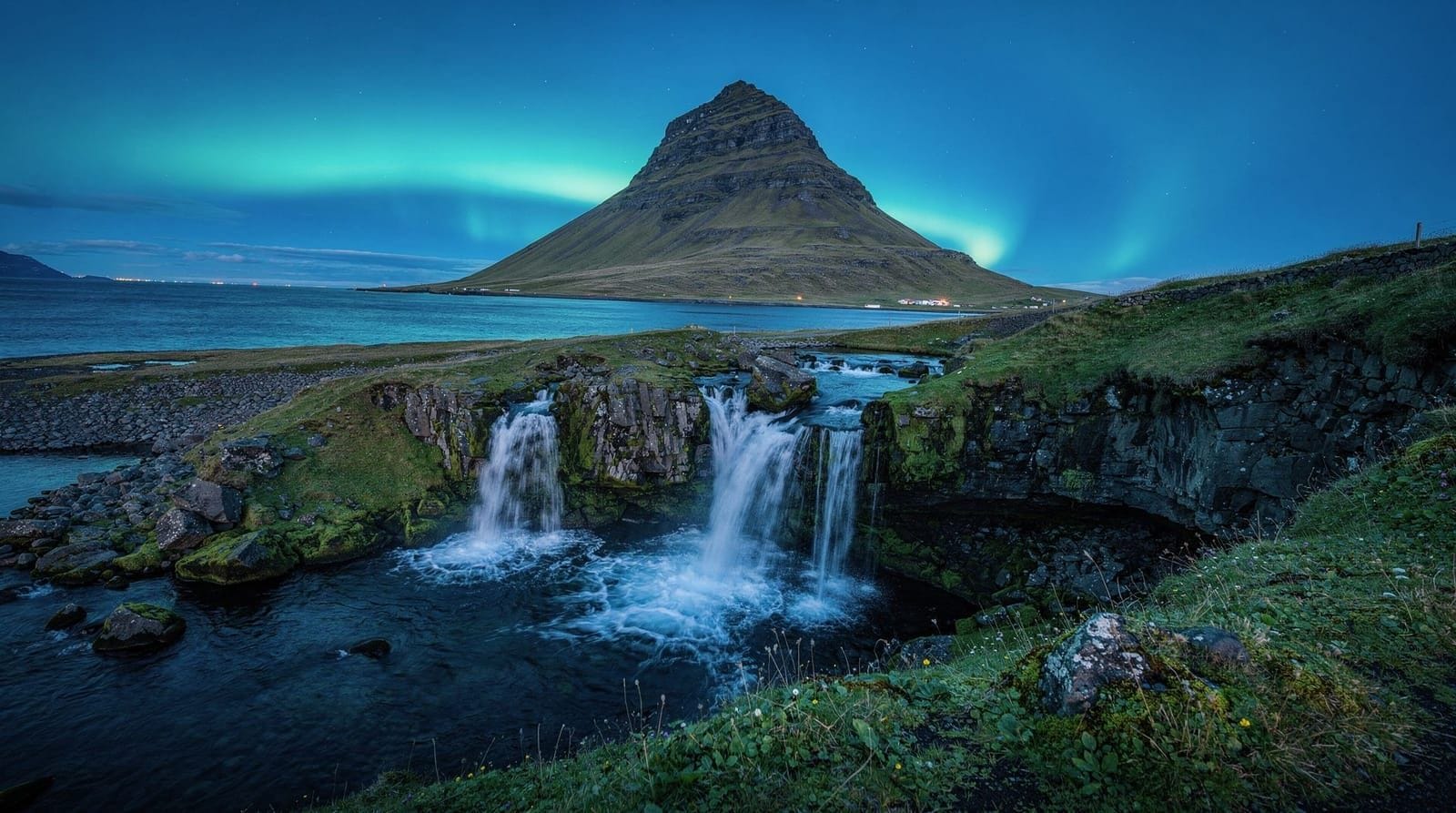
Kirkjufell is the arrow-shaped mountain photographed so frequently that it has become a visual shorthand for Iceland itself. The adjacent waterfall, Kirkjufellfoss, is small by Icelandic standards but positioned perfectly to frame the mountain in the classic shot. The car park is right off the road at Grundarfjörður; the walk to the best viewpoint is about five minutes.
The reality: yes, it looks like the photographs. Yes, there will be other people there. In May there are still relatively few; by July, the pullout is full and there is a queue for the “good spot” beside the fall. The best light is in the early morning, which favours starting early — this is the primary reason the 7 a.m. departure matters.
What makes Kirkjufell interesting beyond the photograph is the geology. The mountain is an isolated stack of relatively soft lava that erosion from all sides has shaped into the symmetrical form. The summit is accessible via a steep scrambling route (cables in places) and takes about 2 hours return. On a one-day trip you almost certainly cannot do this; save it for the overnight version.
The Kirkjufell photography guide covers the best positions, light conditions, and timing for both the standard shot and the more interesting alternatives.
Stop 2: Ólafsvík or Grundarfjörður for coffee and fuel (30 minutes)
The north coast of Snæfellsnes has small fishing towns every 20-30 kilometres. Ólafsvík has a bakery that opens early and a fuel station. This is the practical stop: fill the tank, buy pastries, stretch. Nothing dramatic. The towns are honest working harbours and worth a brief walk but not a long diversion.
In Grundarfjörður itself, the Bjargarsteinn Mathús restaurant is worth noting for a future visit — good local fish, reasonable prices — but at 8:30 a.m. it will not be open, and on a one-day itinerary you cannot afford the time anyway.
Stop 3: Snæfellsjökull National Park and glacier viewpoint (1.5 hours)
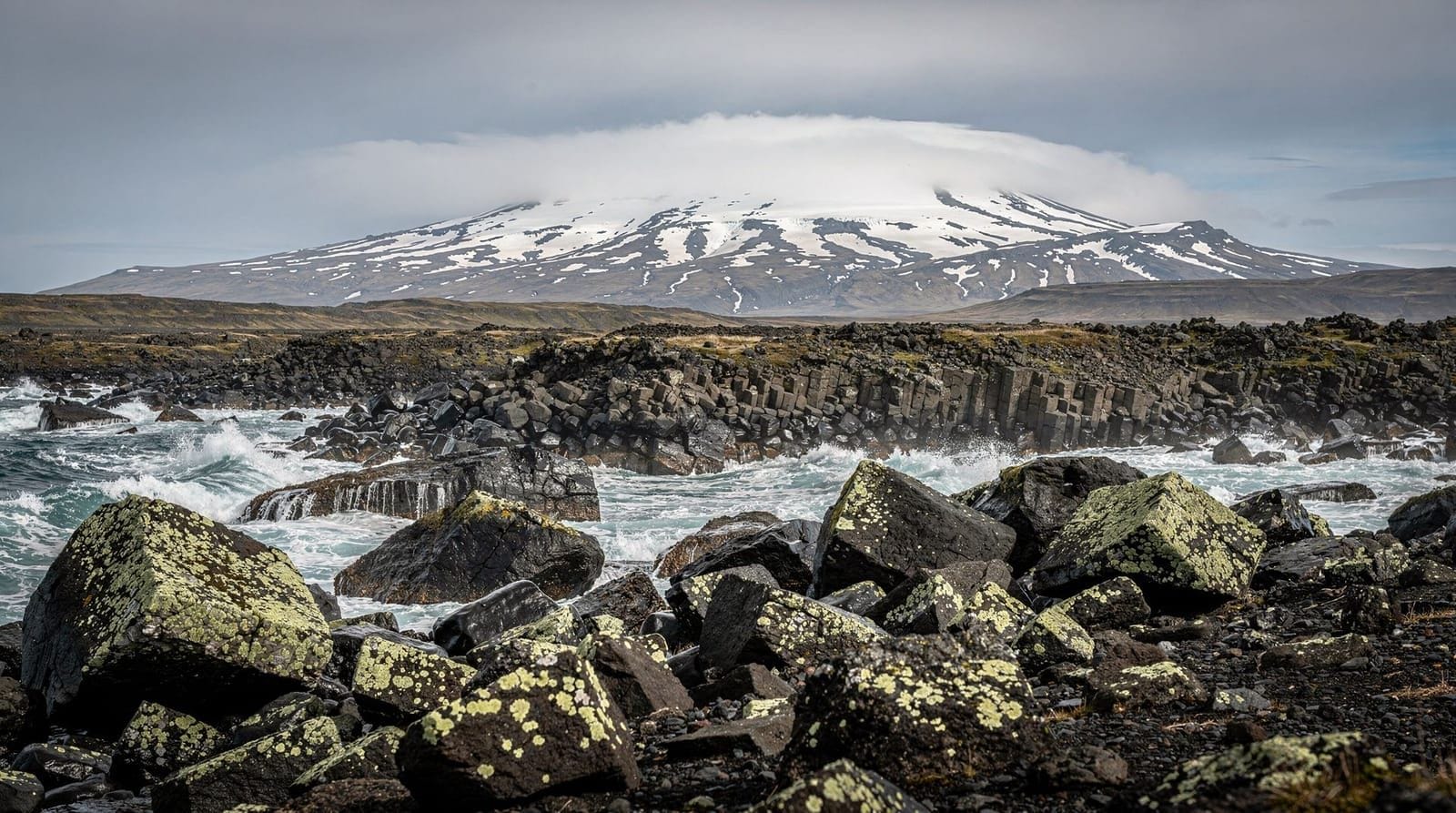
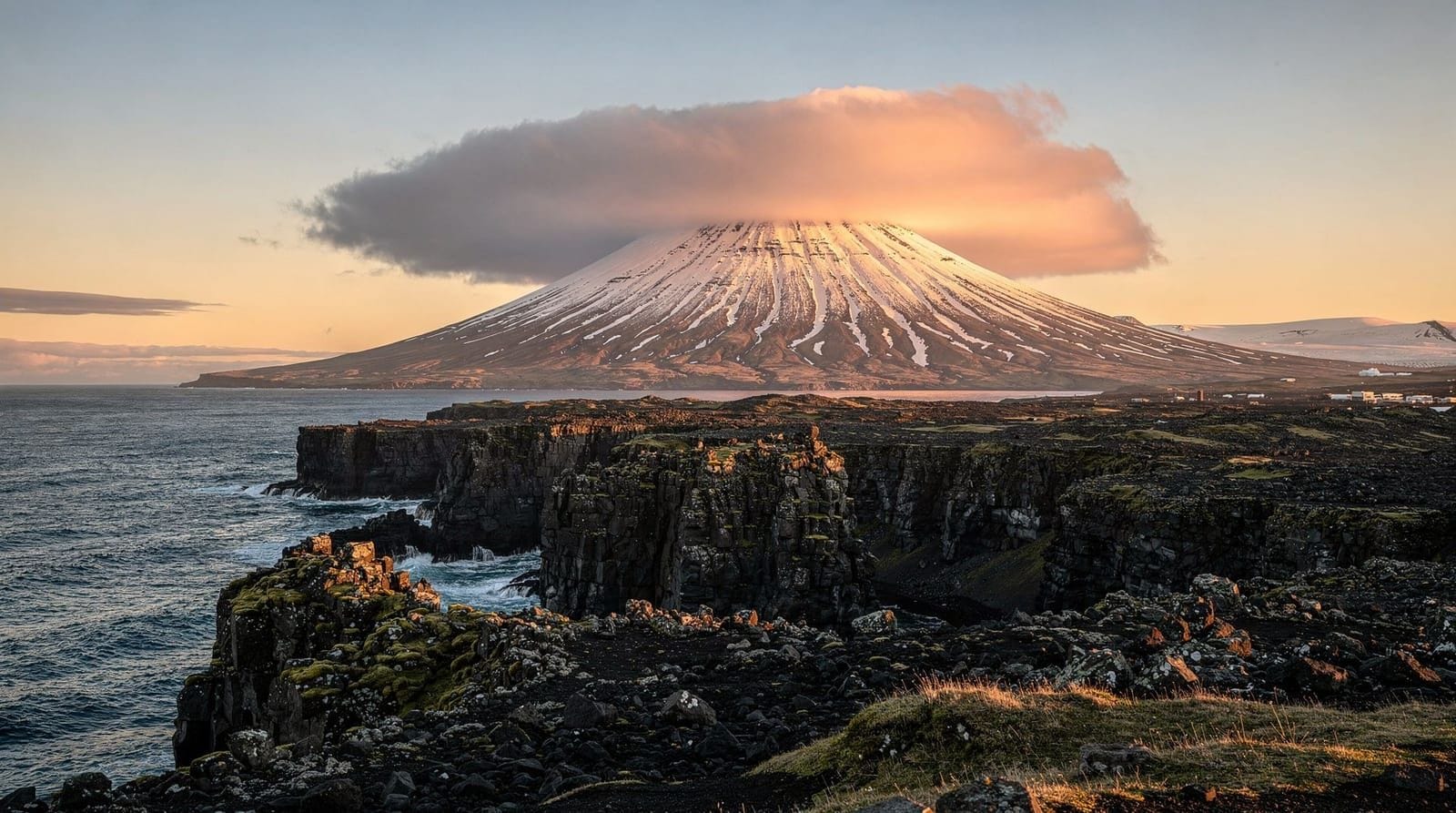
The glacier-capped stratovolcano Snæfellsjökull is the peninsula’s centrepiece and the setting for the entrance to the earth in Jules Verne’s Journey to the Centre of the Earth. The glacier has been retreating — significantly — for decades and the ice cap is now noticeably smaller than the historical photographs in the visitor centre show.
The national park visitor centre at Hellnar has the most information and is the sensible base. Entry to the park is free. From here, the short trail to the Malarrif lighthouse runs along dramatic coastal cliffs — columnar basalt, sea arches, nesting seabirds in spring. Allow 45-60 minutes for the lighthouse trail.
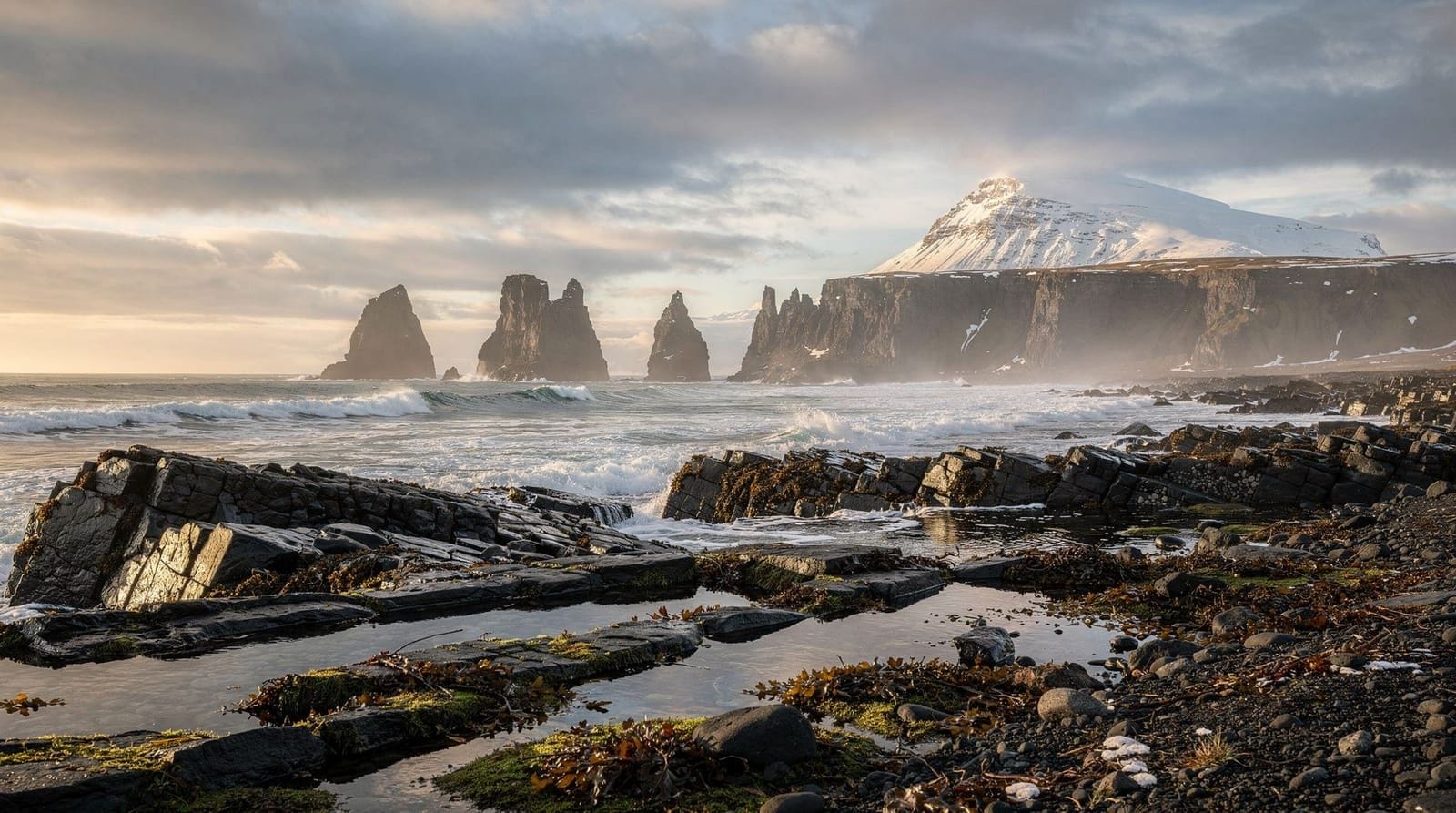
The Djúpalónssandur black sand beach, a 10-minute drive south from Hellnar, is one of the best short stops on the peninsula: a sheltered cove with black sand, sea stacks, and the rusted remains of a British trawler wrecked in 1948. The Lifting Stones of Djúpalón are four basalt boulders used historically to test the strength of fishermen; try lifting Hálfdrættingur (about 54 kg) and see how you rate against 19th-century fishing crew standards.
The glacier itself is only accessible on foot with crampons and a guide. The glacier hike is a serious half-day commitment that does not fit a one-day itinerary. But the views of the ice cap from below are visible from multiple points along the south coast road.
Stop 4: Arnarstapi and the coastal walk (1.5 hours)
Arnarstapi is a small harbour village on the south side of the peninsula where a 3-kilometre coastal path runs to the neighbouring village of Hellnar. This path is the best walking on the peninsula for someone with limited time: basalt sea arches, cliff formations, nesting Arctic terns in summer, and views back to the glacier. The path is easy and mostly flat; allow about 1.5 hours for the walk one way plus time to look around Arnarstapi.
The Arnarstapi harbour has a seafood stand in summer that sells langoustines and fish soup. The langoustines, when available, are worth it — genuinely fresh and simple. Coffee is available at the small restaurant in the harbour building. In the shoulder seasons (May, September-October) the stand may not be operating; check the harbour building cafe as a backup.
The stone arch at Gatklettur, visible from the Arnarstapi-to-Hellnar path, is one of the most dramatically composed pieces of coastal rock in Iceland. The arch frames the sea and, if the light is right, the glacier in the background. Allow 10 minutes extra to walk down to it.
Stop 5: Lava fields and the Berserkjahraun (optional, 45 minutes)
The Berserkjahraun lava field between Grundarfjörður and Stykkishólmur is one of the best accessible lava landscapes on the peninsula. The road through it (Route 54) has pullouts from which you can walk into the field. The lava is ancient and heavily moss-covered — a deep, spongy green in summer — and the contrast with the raw lava fields of the south is instructive. This is what a lava field looks like after 3,000-4,000 years of weathering.
Rauðfeldsgjá gorge, a narrow fissure in the lava on the south side of the peninsula near Arnarstapi, is a 20-minute detour with a striking interior — you can walk into the gorge for some distance, though the inner section requires scrambling. The name translates roughly as the Red Cloak’s Ravine, from an old saga story.
Neither of these is essential on a one-day trip. I mention them because they are easy additions for people who have made good time and want something beyond the main stops.
One day versus two: what you actually gain
| One day | Two days | |
|---|---|---|
| Kirkjufell | Yes, viewpoint only | Yes, plus optional summit hike |
| Glacier hike | No | Possible (half-day, guided) |
| Coastal path (Arnarstapi–Hellnar) | One way, rushed | Full walk both directions, unhurried |
| Stykkishólmur | Skipped | Included |
| Overnight cost | None | ~20,000–28,000 ISK for a double at Hellnar |
| Overall pace | Tight, some driving fatigue | Relaxed |
If your schedule genuinely only allows one day, it delivers real value. If you can add a night, the difference in what you experience is significant rather than marginal.
What to skip in one day
The Vatnshellir lava tube in the national park requires a guided tour (about 3,500 ISK, 45 minutes). Interesting but not essential if time is short. The tour runs on fixed times; missing a slot means waiting for the next one, and that delay compounds badly on a tight schedule.
Stykkishólmur on the north coast is a pleasant town with a distinctive volcanic island-dotted bay — worth 90 minutes — but adds significant driving distance to a route already at its limit. Save it for the overnight version.
This guided day trip specifically covers Kirkjufell and the national park highlights with a knowledgeable guide, and is a good option for travellers who want the curated experience without the navigation pressure of self-driving.
The verdict
One day is enough to understand why the peninsula gets its reputation. Two days is enough to actually appreciate it — with a night in Arnarstapi or Hellnar (the Hellnar Hotel is small, atmospheric, and has a good restaurant; around 20,000-28,000 ISK for a double), you can do the glacier hike, walk the full coastal path, and spend an evening watching the light on the ice cap from the west coast.
The day-trip version gives you Kirkjufell (genuinely as good as the photographs), the national park coastal cliffs, Arnarstapi and the sea arch, and a sense of the scale of the peninsula. That is a meaningful day.
The Snæfellsnes 2-day itinerary builds on this framework with accommodation recommendations and a second-day route that covers the lava tube, Buðir black church, and the Borgarfjörður area on the way back to Reykjavík. If your schedule allows a second day, the additions are worthwhile.
FAQ
Is Snæfellsnes worth visiting if I’ve already done the Golden Circle?
Yes — the peninsula is geographically and visually distinct: a glacier-capped volcano, black sand coves, sea cliffs, and Kirkjufell mountain, none of which overlap with the Golden Circle’s geothermal and rift-valley sights. It’s the natural next day trip for a second visit to the Reykjavík area.
Can I do Snæfellsnes without a car?
It’s difficult. Bus schedules serving the peninsula from Reykjavík are infrequent and don’t support a full day of stops, so a self-drive rental or a guided day tour are the two realistic options for covering Kirkjufell, the national park, and Arnarstapi in one day.